
Tool DiscoveryTool Discovery

Oura Ring Reddit: What r/ouraring's 176,800 Members Actually Say in 2026

The r/ouraring subreddit has 176,800 members sharing sleep data, readiness scores, illness detection stories, and year-long health experiments with the Oura Ring. It is the largest dedicated smart ring community on Reddit, and the detail of real-world experience there goes far beyond what any review site publishes. The Oura Ring 4 uses machine learning to generate a Readiness Score each morning from 20+ biometric signals: heart rate variability, resting heart rate, skin temperature, respiratory rate, sleep quality, and recent activity. The ring also detects illness 1-3 days before symptoms appear by tracking overnight temperature deviations from your personal baseline. This guide pulls from r/ouraring (176,800 members), r/QuantifiedSelf (89,400 members), r/FitnessTrackers, and crossover threads in r/whoop and r/GarminWatches to give you the unfiltered community verdict on whether the Oura Ring 4 is worth its $299-$499 price tag and $5.99 per month membership in 2026.

Updated: 2026-02-259 min read

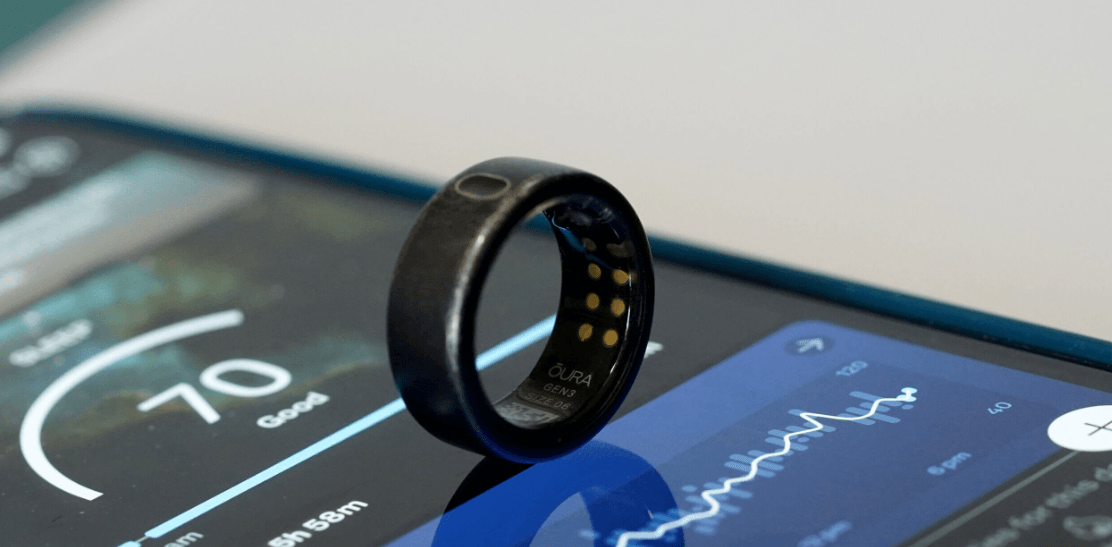
The Oura Ring 4 generates a daily AI Readiness Score from 20+ biometric signals including HRV, skin temperature, and sleep quality

Oura Ring 4 smart ring on finger with app showing AI readiness score and sleep staging breakdown

Detailed Tool Reviews

1

Oura Ring 4

4.4

The most discussed AI health ring on Reddit, with r/ouraring's 176,800 members consistently rating it the best sleep tracker available in any form factor. Uses machine learning to generate a daily Readiness Score from 20+ biometrics and detects illness 1-3 days before symptoms via overnight temperature tracking.

Key Features:

  • Readiness Score: daily 0-100 AI synthesis of HRV, resting HR, skin temperature, and sleep data
  • Illness detection: temperature spike alerts 1-3 days before cold and flu symptoms appear
  • Sleep staging: detailed nightly breakdown of light, deep, and REM sleep
  • Stress meter: tracks sympathetic nervous system activity throughout the day
  • Period prediction: cycle tracking with AI-assisted ovulation estimates

Pricing:

$299-$499 ring + $5.99/mo or $69.99/yr membership

Pros:

  • + Best-in-class sleep tracking per consistent r/ouraring community consensus
  • + Ring form factor is far more comfortable overnight than any wrist tracker
  • + Illness detection has helped members catch COVID-19 and colds 1-3 days early
  • + 7-day battery eliminates daily charging disruptions to sleep data

Cons:

  • - $5.99/month membership locks trends, insights, and illness alerts behind paywall
  • - Workout and activity tracking far less accurate than Apple Watch or Garmin
  • - Step counter widely criticized as unreliable in r/ouraring threads

Best For:

Anyone who prioritizes sleep quality, recovery tracking, and early illness warning over workout metrics, and is comfortable with the subscription model.

Try Oura Ring 4
2

Whoop MG

4.3

The primary alternative to Oura Ring discussed across Reddit, particularly in r/whoop (98,000 members) and crossover threads on r/ouraring. Uses AI to calculate a daily Strain score and Recovery percentage optimized for athletic performance. No upfront hardware cost but the $359/yr membership is 5x higher than Oura's $69.99/yr.

Key Features:

  • Strain score: AI-calculated daily exertion score from cardiovascular load data
  • Recovery percentage: 0-100% readiness for training based on HRV, sleep, and resting HR
  • Sleep coaching: personalized nightly sleep need based on recent training strain
  • 14-day battery life (double the Oura Ring 4's 7 days)
  • No hardware cost: device included in annual membership

Pricing:

$359/year (hardware included in membership)

Pros:

  • + Better for athletes: detects micro-variations in performance data more sensitively than Oura
  • + No upfront device cost, hardware is part of the membership
  • + 14-day battery life vs Oura Ring's 7 days

Cons:

  • - $359/year is 5x higher than Oura's $69.99/yr after the ring purchase
  • - Wristband form factor less comfortable overnight for some users vs ring
  • - Less focused on general wellness versus athletic performance optimization

Best For:

Athletes and serious fitness enthusiasts who want performance and training optimization data rather than general sleep and wellness insights.

Try Whoop MG

The r/ouraring community: who buys the Oura Ring and what they actually use it for

The r/ouraring subreddit is where most Oura Ring buyers land within a week of receiving their device. The community skews toward people who care deeply about sleep quality, recovery data, and using biometrics to make daily decisions rather than tracking steps or closing fitness rings.

CommunityMembersMost Active Thread TypesGeneral Tone
r/ouraring176,800Sleep data screenshots, illness detection stories, membership complaints65% positive, 25% neutral, 10% negative
r/QuantifiedSelf89,400Long-term data analysis, biohacking experimentsTechnical, analytical
r/FitnessTrackers42,000Oura vs Whoop vs Garmin device comparisonsMixed, comparison-focused
r/whoop98,000Crossover posts from users considering switchingAthletic, performance-focused

The buying motivations that come up most in r/ouraring new member threads:

  • Sleep improvement: the most common reason. Members want to understand why they feel tired after 8 hours in bed, and the sleep staging data is the primary answer.
  • Illness early warning: especially among members with chronic conditions, frequent travel schedules, or high-stakes jobs where getting sick at the wrong time has real consequences.
  • Recovery optimization: athletes and gym-goers using the Readiness Score to decide when to push hard and when to rest.
  • Menstrual cycle tracking: the period prediction feature has a dedicated and vocal subset of the community.
  • General curiosity: biohackers and quantified-self enthusiasts who find the data inherently interesting to collect.

The community tends to be health-conscious and data-literate. Members regularly post month-long readiness score graphs, cross-reference sleep stages with next-day performance, and share charts showing how alcohol, late eating, or travel stress affects their overnight biometrics.

"When it comes to data accuracy / quality especially for sleep tracking nothing beats Oura." — r/FitnessTrackers, highly upvoted device recommendation thread, 2024

The AI features r/ouraring members actually rely on: Readiness Score, illness detection, and sleep staging

The Readiness Score is the Oura Ring's signature feature and the one r/ouraring members discuss most. Every morning the app synthesizes HRV, resting heart rate, skin temperature, sleep efficiency, sleep timing, and recent activity levels into a single 0-100 score with an explanation of what drove it up or down.

What the score ranges mean in practice, based on consistent community reports:

  • 85-100 (green): fully recovered, body primed for a demanding workout or stressful day
  • 70-84 (green): good readiness, normal activities and moderate exercise without concern
  • 60-69 (yellow): recovery deficit present, lighter activity recommended
  • Below 60 (red): significant recovery gap, rest day strongly recommended

The key accuracy finding from r/ouraring: most members report the score correlates well with how they subjectively feel. When you feel run down, it reads low. When you feel great, it reads high. The HRV-based component is considered the most reliable signal.

AI FeatureWhat It TracksCommunity Accuracy RatingBest Use Case
Readiness Score20+ biometrics into daily 0-100 scoreHigh (strong correlation with subjective feeling)Recovery planning, workout scheduling
Illness detectionOvernight temperature deviation from baselineHigh (catches most illness 1-3 days early)Early warning for busy schedules and travel
Sleep stagingNightly light, deep, and REM breakdownHigh for weekly trends, moderate for individual nightsUnderstanding long-term sleep patterns
Stress meterSympathetic nervous system activityModerate to highIdentifying daily stressors and recovery activities
Period predictionCycle and ovulation estimates from temperatureHigh (most consistently praised feature by women users)Reproductive health planning

Illness detection generates the most memorable community stories in r/ouraring. Members describe receiving temperature spike notifications days before they tested positive for COVID-19 or felt cold symptoms. The mechanism is straightforward: a sustained temperature increase of 0.5-1 degree Celsius above your personal baseline for two or more nights triggers an alert. The ring establishes that personal baseline over the first two weeks.

"It's literally telling me when I'm starting to show signs of a flare or another illness. This thing is paying for itself." — u/Amazing_Owl1231, r/ouraring, 2025

The stress meter is the second-most-discussed AI feature. Members describe it as "eye opening" for seeing how specific activities, people, or time periods drive their autonomic stress response throughout the day, making it a tool for identifying what actually causes physiological stress versus what just feels stressful.

The membership subscription: the most debated topic across Oura Ring Reddit threads

The Oura Ring membership is the most divisive topic on r/ouraring. Every buying thread arrives at the same question: how do you feel about paying $5.99 per month (or $69.99 per year) on top of a $299-$499 device to access the features you bought the ring for?

OptionMonthly CostAnnual CostWhat You Actually Get
Oura Ring 4 with membership$5.99/mo$69.99/yrFull readiness scores, all trends, illness alerts, sleep insights, period prediction, stress meter
Oura Ring 4 without membershipFreeFreeThree daily scores (Sleep, Readiness, Activity), ring battery level, basic settings only
Ultrahuman Ring AIR (no subscription)$0$0Full feature access, one-time $349 device cost
Samsung Galaxy Ring (no subscription)$0$0Full features on Galaxy phones, one-time $299 device cost
Whoop MG (membership-based)~$30/mo$359/yrFull platform, hardware included in membership

What you lose without the membership is more significant than the headline score suggests. The three free daily scores are top-line numbers only. The detailed breakdown of why your readiness is low, what your HRV trend looks like over the past 30 days, when the illness temperature spike occurred, and what your cardiovascular age data shows are all paywalled.

The community splits into three consistent camps:

  • Subscription accepters: most active r/ouraring members, argue $5.83 per month is less than one coffee and the depth of daily data justifies it
  • Subscription critics: bought the device expecting full features included, feel the paywall is dishonest after spending $300-$499 on hardware
  • Switchers: moved to Ultrahuman Ring AIR or Samsung Galaxy Ring specifically to avoid any recurring fees

"Without the membership, you can only see some basic data for the current day, while further insights are withheld. Near-sighted dumb move." — u/marechal, Oura Ring discussion thread, 75 upvotes, 2024

The practical advice from veteran r/ouraring members is consistent: if you will check the app at least 5 times per week, the annual plan at $69.99 is worth it. Only use monthly if testing the ring before committing. The community reporting rate of daily app usage is high, with the Oura membership page noting three-quarters of subscribers check in at least five times per week.

Oura Ring 4 vs Whoop vs Apple Watch: what the Reddit comparison threads actually show

Oura vs Whoop is the most common comparison thread on r/ouraring, partly because both devices focus on HRV, recovery, and sleep, but serve different primary use cases. The comparison keeps appearing because buyers switching from or considering Whoop post their decision reasoning extensively.

FeatureOura Ring 4Whoop MGApple Watch Series 10Ultrahuman Ring AIR
Upfront cost$299-$499$0 (included in membership)$399+$349
Annual subscription$69.99/yr$359/yrNoneNone
Sleep tracking qualityBest-in-class (community consensus)Very goodModerateGood
Workout trackingBelow averageExcellentExcellentGood
Battery life7 days14 days18-36 hours6 days
Key AI featureReadiness Score + illness detectionStrain score + Recovery %Activity rings, ECGReadiness score (no sub)
Best forGeneral wellness, sleep, longevityAthletic performance, training optimizationFitness + smartwatch featuresBudget, subscription-free recovery

The clearest community consensus on Oura vs Whoop: choose Oura if sleep quality and general recovery are your priority. Choose Whoop if athletic training optimization is your priority. The communities barely overlap in the user type they serve best.

r/GarminWatches members who post about Oura typically run both devices: Garmin for outdoor sport and workout tracking, Oura overnight for sleep data. This dual-device approach is the most common crossover setup mentioned in comparison threads.

"Superior sleep tracking. Far nicer to track sleep with an unobtrusive ring. I have absolutely no complaints about the Oura Ring's comfortability to sleep in." — u/BigStugots, r/GarminWatches comparison thread, 2024

The Ultrahuman Ring AIR gets specific mention in r/ouraring subscription debate threads as a genuine alternative for buyers who refuse any recurring fee. The community acknowledges its readiness score and sleep tracking as solid at $349 with zero ongoing cost. The consistent caveat is that Oura's algorithm has years more development and community data behind it, which shows in the illness detection accuracy and readiness score personalization.

Is the Oura Ring 4 worth it in 2026? Community consensus from r/ouraring

The r/ouraring answer to "is it worth it" depends almost entirely on what you want from a wearable. The community is specific and direct about this split, which is useful for anyone trying to decide.

Who r/ouraring says should buy the Oura Ring 4:

  • People whose primary goal is understanding sleep quality and improving recovery over time
  • Anyone with chronic health issues or high illness exposure who wants early temperature-based warning
  • People who have tried wrist trackers but find them uncomfortable overnight (the most common switching story)
  • Biohackers and data enthusiasts who will check the app daily and act on the trends
  • Women tracking menstrual cycles who want AI-assisted cycle and ovulation prediction

Who the community says should look at alternatives:

  • Athletes who need accurate workout metrics, GPS, and sport-specific data (Apple Watch or Garmin)
  • Anyone opposed to subscription fees on top of device hardware (Ultrahuman Ring AIR or Samsung Galaxy Ring)
  • People who primarily want step counting, activity tracking, or detailed exercise logs (the ring does these poorly)
  • Existing Oura Ring 3 owners: community consensus is the Ring 4 upgrade is incremental and not worth the cost
Buyer ProfileCommunity RecommendationBest Alternative If Not
Sleep-focused, data-curiousBuy Oura Ring 4Ultrahuman Ring AIR if subscription is a dealbreaker
Athlete, performance-focusedBuy Whoop MG insteadApple Watch Series 10 for sport tracking
Budget or subscription-averseUltrahuman Ring AIR ($349, no fees)Samsung Galaxy Ring ($299, no fees)
Already have Ring 3Stay on Gen 3, skip upgradeOnly upgrade if hardware is failing or damaged
Wrist tracker user, wants sleep dataAdd Oura Ring alongside current deviceMany r/ouraring members run both

Long-term r/ouraring sentiment is notably more positive than first-month sentiment. Members who have used the ring for 6 months or more consistently describe the trend data becoming more valuable over time as the AI personalizes to their patterns and baseline deviations become more meaningful.

"Love mine, had it for 3.5 years and it provides tremendous insights. I would buy it straight away again if it gets lost or breaks." — u/Benl324, r/AmexPlatinum health wearables comparison thread, 2024

Frequently Asked Questions

Yes, if sleep tracking is your primary goal. r/ouraring members consistently rate the Oura Ring 4 as the most accurate sleep tracker available in any form factor, with detailed light, deep, and REM stage breakdowns. The ring form factor is also more comfortable overnight than any wrist device, which itself improves sleep data accuracy by ensuring you actually wear it every night.

The r/ouraring verdict: the best sleep tracker available, with one real caveat

The 176,800 members of r/ouraring have reached a clear long-term consensus: the Oura Ring 4 is the most accurate sleep tracker and recovery monitor in a wearable form factor, and the illness detection genuinely works. The recurring criticism is just as consistent: the $5.99 per month membership feels like double-dipping on a $300-$499 device. If you can accept the subscription model or pay the $69.99 annual fee upfront, the community verdict is that the data quality and AI personalization justify the total cost over 12+ months of daily use.

About the Author

Amara - AI Tools Expert

Amara

Amara is an AI tools expert who has tested over 1,800 AI tools since 2022. She specializes in helping businesses and individuals discover the right AI solutions for text generation, image creation, video production, and automation. Her reviews are based on hands-on testing and real-world use cases, ensuring honest and practical recommendations.

View full author bio

Related Guides