
Tool DiscoveryTool Discovery

Whoop Reddit: What r/whoop's 98,000 Members Say About the AI Fitness Tracker in 2026

The r/whoop community has 98,000 members who share a common relationship with their fitness tracker: they treat the data like a daily protocol, not just a gadget feature. Whoop is unusual among wearables because it has no screen, no GPS, and no step counter. What it does have is the most detailed AI-powered recovery and strain system in any consumer wearable. Whoop uses machine learning to calculate your personal baseline for HRV, resting heart rate, and sleep patterns, then generates a daily Recovery percentage and Strain score that tells you how hard your body can push versus how much it needs to rest. The system is built for athletes and serious fitness users who want to optimize training load, not just count steps. This guide pulls from r/whoop (98,000 members), crossover threads in r/ouraring, r/Garmin, and r/fitness to give you the honest community verdict on whether Whoop is worth its subscription cost and who it actually serves in 2026.

Updated: 2026-02-259 min read

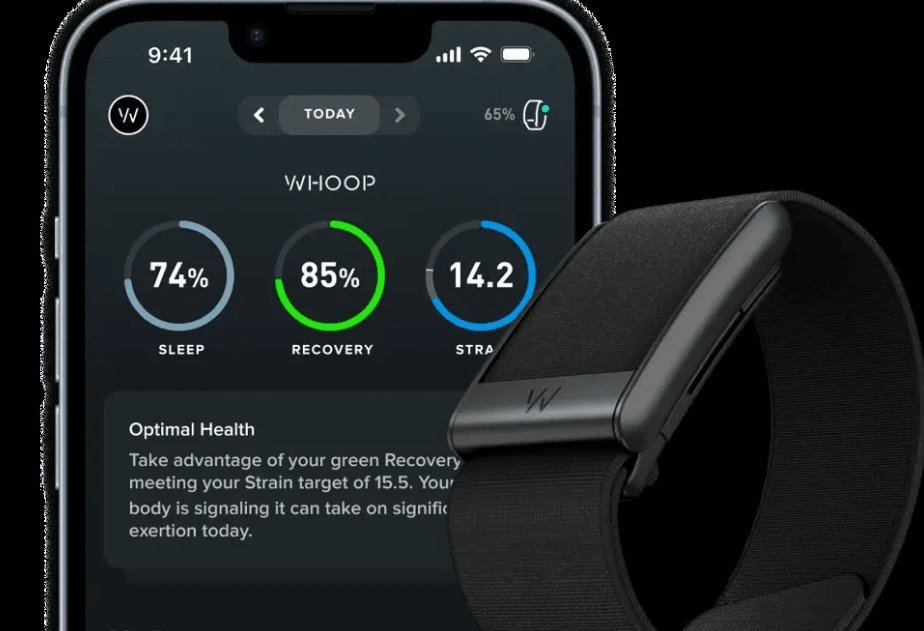
Whoop uses AI to calculate a personal Recovery percentage and Strain score each day based on HRV, sleep, and cardiovascular data

Whoop 5.0 fitness tracker wristband with app showing AI recovery percentage and daily strain score

Detailed Tool Reviews

1

Whoop 5.0

4.3

The most discussed AI fitness recovery tracker in r/whoop (98,000 members) and the primary Oura Ring alternative for athletes. Uses machine learning to calculate personalized Recovery % and Strain scores from HRV, resting heart rate, and sleep data. No hardware upfront cost: the device is included in the annual membership. Worn on the wrist or bicep.

Key Features:

  • Recovery %: daily 0-100% AI readiness score based on HRV, resting HR, and sleep quality
  • Strain Coach: AI-calculated daily exertion score with personalized optimal strain range
  • Sleep Coach: AI recommendation for bedtime and wake time based on your strain debt
  • Health Snapshot: 6-minute resting biometric assessment for cardiovascular health data
  • No hardware cost: device included in membership, 14-day battery life

Pricing:

Whoop One $199/yr / Whoop Peak $239/yr / Whoop Life $359/yr (hardware included)

Pros:

  • + Best AI recovery data for athletes: picks up micro-variations in training load more sensitively than any other wearable
  • + No upfront hardware cost, device included in membership at all three tiers
  • + 14-day battery life doubles the Oura Ring and most smart watches
  • + r/whoop community is highly engaged and data-literate, sharing protocols and benchmarks

Cons:

  • - Device becomes non-functional if you cancel the subscription
  • - No screen, no GPS, no step counter: limited use cases outside recovery and sleep tracking
  • - Step tracking and general activity logging consistently criticized as poor in r/whoop threads
  • - Heart rate accuracy during high-intensity interval training reported as inconsistent

Best For:

Athletes, CrossFit practitioners, endurance athletes, and fitness-focused users who want to optimize training load through AI-powered recovery data rather than counting steps or using GPS.

Try Whoop 5.0
2

Garmin (Fenix / Forerunner)

4.5

The most recommended Whoop alternative for users who want recovery data plus GPS sports tracking, without any subscription fees. r/Garmin (145,000 members) and crossover threads in r/whoop consistently pair Garmin watches with Oura Rings for sleep or run them as standalone devices. Garmin Body Battery uses AI to estimate energy levels throughout the day.

Key Features:

  • GPS: built-in satellite navigation for accurate outdoor activity tracking
  • Body Battery: AI-powered energy level score combining HRV, sleep, and activity
  • Training Readiness: daily recovery score similar to Whoop Recovery %
  • No subscription: all features accessible with one-time device purchase
  • Multi-week battery life on Fenix series (up to 40 days in GPS mode)

Pricing:

$199-$1,199 one-time (no subscription required)

Pros:

  • + No subscription fee: one-time cost with no recurring payments
  • + GPS for outdoor sports: running, cycling, hiking, swimming all tracked accurately
  • + Body Battery and Training Readiness provide recovery data comparable to Whoop

Cons:

  • - Upfront cost is higher: $349+ for a Garmin with serious features vs $0 for Whoop hardware
  • - Body Battery less personalized than Whoop's AI-driven strain and recovery calculations
  • - Watch form factor less comfortable overnight vs Whoop band for some users

Best For:

Outdoor athletes and runners who need GPS accuracy and are unwilling to pay a subscription fee, willing to pay more upfront for a full-featured device.

Try Garmin (Fenix / Forerunner)

The r/whoop community: who actually uses Whoop and why they stay subscribed

The r/whoop subreddit has 98,000 members and a notably high engagement rate relative to its size. Posts get detailed, data-rich replies. Members share actual Recovery %, HRV numbers, and strain score comparisons at a level of specificity that marks this as a community of serious users, not casual fitness gadget buyers.

CommunityMembersMost Active DiscussionsPrimary User Profile
r/whoop98,000Recovery scores, Whoop vs Oura comparisons, subscription tier debatesAthletes, CrossFitters, endurance runners
r/ouraring176,800Sleep data, illness detection, Oura vs WhoopGeneral wellness, sleep-focused
r/Garmin145,000Garmin vs Whoop, GPS tracking, no-subscription argumentOutdoor athletes, runners
r/fitness3.2MWhoop mentioned in recovery optimization threadsGeneral fitness community

The Whoop user profile that r/whoop threads consistently describe:

  • Athletes training 4+ days per week who want to avoid overtraining
  • CrossFit practitioners tracking high-intensity strain accumulation
  • Endurance athletes (runners, cyclists, triathletes) managing training volume
  • Sleep-deprived professionals who use Recovery % to justify rest days
  • Biometric data enthusiasts who engage deeply with HRV trends over months

The crucial factor the community identifies repeatedly: Whoop only delivers value to users who act on the data. Members describe checking their Recovery % before deciding whether to train hard or dial back. The community phrase "if you're going to ignore the data, buy a Garmin" appears in new member advice threads repeatedly.

The most referenced critical thread in r/whoop history is "Whoopgate — The receipts," a viral post cataloguing accuracy issues and the controversial forced hardware upgrade. The thread is cited in any honest community discussion about Whoop's limitations alongside its strengths. It also contributed to significant member skepticism about the MG upgrade pricing.

"I like how whoop says you slept good, you had a good recovery, now GET AFTER IT." — r/whoop (2025)

How Whoop's AI recovery system works: strain, recovery, and sleep coaching explained

Whoop's core technology is a machine learning model that establishes your personal baseline from the first 30 days of wear, then measures how far your daily metrics deviate from that baseline. This personalization is what differentiates it from devices that use population averages.

The three AI outputs the r/whoop community discusses most:

  • Recovery %: generated each morning. Combines the previous night's HRV, resting heart rate, sleep performance, and recent strain history into a 0-100% score. Green (67-100%) means your cardiovascular system recovered well. Yellow (34-66%) means partial recovery. Red (0-33%) means significant deficit.
  • Strain Score: accumulated throughout the day in real-time. Runs on a 0-21 scale representing cardiovascular load. The AI calculates your personal optimal strain range for the day based on your morning Recovery %.
  • Sleep Coach: uses your recent strain accumulation to calculate how much sleep you need that night and suggests a bedtime and wake time to hit your recovery target.
Whoop MetricScaleWhat High MeansWhat Low Means
Recovery %0-100%Fully rested, ready for max effortSignificant deficit, rest day recommended
Daily Strain0-21Intense training day (18-21 = competition level)Light activity or rest (0-8)
Sleep Performance0-100%Slept as much as neededSleep debt accumulating
HRVPersonal ms baselineParasympathetic dominance, recoveredSympathetic activation, stress or fatigue

The community consensus on accuracy: Whoop's Recovery % is highly accurate for trends over weeks and months. For individual-day assessments, some members report the morning score feeling off after unusual lifestyle events (alcohol, time zones, illness). The r/whoop recommendation is to trust the 7-day trend more than any single morning score.

"Recently had a 'workout' of Yoga that moved my strain on that day from 4.1 to 17.3 in just 20min. Problem was I was sitting on my chair doing office work." — r/whoop (2025)

Ghost workout detection is the single most discussed AI accuracy complaint in r/whoop. The community workaround: manually delete auto-detected workouts that do not match actual activity.

Whoop subscription tiers: what you get at $199, $239, and $359 per year

Whoop restructured its pricing in 2024-2025, moving from a single membership tier to three. This change generated significant r/whoop discussion and is one of the most referenced topics in new buyer threads.

TierAnnual CostHardwareKey Features
Whoop One$199/yrWhoop 5.0 bandCore Sleep, Strain, and Recovery tracking
Whoop Peak$239/yrWhoop 5.0 bandEverything in One + Healthspan, advanced health metrics
Whoop Life$359/yrWhoop MG (Medical Grade)Everything in Peak + ECG, blood pressure monitoring, medical-grade sensors

The critical r/whoop community insight on the subscription model: if you cancel your Whoop subscription, the device becomes a non-functional wristband. Unlike Oura Ring (which retains basic daily scores without a membership), Whoop provides zero data access without an active subscription. The community treats this as the fundamental trade-off of the Whoop model.

The Whoop 4.0 subscription workaround r/whoop discovered in 2025: some members found unsold Whoop 4.0 bands at T.J. Maxx and similar discount retailers for approximately $39, which came bundled with a one-year free subscription. TechRadar covered this as a verified community finding. This hack is limited to remaining inventory and the Whoop 4.0 model.

Who r/whoop says each tier is for:

  • Whoop One ($199/yr): most appropriate for athletes who want core strain and recovery without advanced health features. The community starting recommendation.
  • Whoop Peak ($239/yr): adds Healthspan metrics that assess cardiovascular age, useful for 30+ users tracking long-term health trends.
  • Whoop Life ($359/yr): the MG hardware adds medical-grade ECG and blood pressure. Only worth it for users whose health conditions or professional roles require those specific measurements.

"I do think forcing everyone to buy new bands was cynical by Whoop. It would have been incredibly simple to make it compatible with existing bands." — r/whoop (2025)

The cumulative cost that r/whoop members calculate before committing: three consecutive years at Whoop One ($199/yr) totals $597. Five years totals $995 — exceeding the upfront cost of most premium Garmin watches with zero recurring fees after purchase.

Whoop vs Garmin vs Apple Watch vs Oura Ring: what the community comparison shows

The r/whoop subreddit gets comparison questions constantly. The most common: "should I buy Whoop or Garmin?" and "I have an Oura Ring, do I need Whoop too?" The community answers are consistent and worth knowing before buying.

FeatureWhoop 5.0Garmin Fenix 8Apple Watch Series 10Oura Ring 4Amazfit Helio Ring
Upfront cost$0$549-$999$399+$299-$499~$299
Annual cost$199-$359/yr$0$0$69.99/yr$0
Recovery AIBest-in-class for athletesBody Battery (good)Basic activity ringsBest for general wellnessRecovery score (basic)
Sleep trackingVery goodGoodModerateBest-in-classGood
GPSNoYesYesNoNo
ScreenNoYes (color)Yes (OLED)NoNo
Step trackingPoorExcellentExcellentPoorGood
Battery life14 days18 days GPS / 40 days standard18-36 hours7 days4-7 days
Best forAthletes, performance optimizationOutdoor athletes, runnersSmartwatch + fitnessSleep, general wellnessNo-subscription Whoop alternative

The r/whoop position on Garmin: Garmin wins if you need GPS for outdoor sports and refuse to pay a subscription. Garmin's Body Battery provides a usable recovery metric at no ongoing cost. The Whoop advantage is the depth and personalization of its strain-recovery model, which Garmin's Body Battery does not match for serious training load management.

The dual-device setup that appears most in r/whoop: Oura Ring for sleep and overnight recovery, Whoop for daytime strain tracking. Members describe this as getting the best of both systems while addressing each device's weakness (Whoop's inferior sleep analysis vs Oura's inferior workout tracking).

"the Whoop is waaaay off" for heart rate accuracy when tested head-to-head against a Polar H10 chest strap during high-intensity intervals. — r/whoop (2025)

The Amazfit Helio Ring is the most recommended no-subscription Whoop alternative in r/whoop threads as of 2025-2026. It offers recovery scoring and sleep tracking with a one-time purchase, no ongoing fees, and no subscription lock-in. The r/whoop position: Whoop's AI depth is still ahead, but Amazfit Helio Ring is the strongest alternative for users unwilling to pay annual fees.

Is Whoop worth it in 2026? Community consensus by user type

The r/whoop community verdict is direct and consistent: Whoop is worth it specifically for athletes who train seriously and will act on recovery data. It is not worth it for casual fitness users, people who primarily track steps and activity, or anyone unwilling to pay an annual subscription for a screenless device.

Who r/whoop says should buy Whoop:

  • CrossFit athletes training 4-6 days per week who want to quantify overtraining risk
  • Endurance athletes (runners, cyclists, triathletes) managing training volume over months
  • Anyone recovering from injury who needs objective data to guide return-to-training pacing
  • Sleep-deprived professionals who want a data-backed system for rest day decisions
  • Biometric enthusiasts who will check HRV trends and act on the recovery percentage daily

Who the community says should look elsewhere:

  • Casual users who want to count steps and close activity rings (Garmin or Apple Watch)
  • Users who primarily want sleep tracking without athletic performance focus (Oura Ring)
  • Anyone unwilling to pay $199+ per year for a device with no screen or GPS
  • Users on a budget: the total cost of Whoop over 3 years exceeds the upfront cost of most Garmins
User ProfileCommunity RecommendationAlternative If Not
Serious athlete, 4+ training days/weekBuy Whoop One ($199/yr)Garmin with Body Battery if GPS needed
Sleep-focused, general wellnessBuy Oura Ring 4 insteadSamsung Galaxy Ring for no subscription
Outdoor runner needing GPSBuy Garmin insteadPolar for GPS without subscription pressure
Mixed: sleep + performanceOura Ring + Garmin comboWhoop Life if unified data preferred
Budget buyerGarmin (one-time purchase)Whoop 4.0 from T.J. Maxx hack if available

The r/whoop community wisdom that appears most consistently across threads: try Whoop free for one month if available, then commit to at least one full year to see the trend data mature. The first two weeks are baseline establishment. The real value shows at 60-90 days when the personalized model has enough data to give meaningful strain context.

"I was skeptical for the first month. By month three the trend data changed how I scheduled my training weeks completely. The Recovery % isn't always right on individual days but the patterns over 60 days are genuinely useful." — r/whoop long-term user thread, 2025

Frequently Asked Questions

Yes for serious athletes who train 4+ days per week and will use Recovery % and Strain data to guide training decisions. Not worth it for casual users, step counters, or anyone who needs GPS. The r/whoop community is consistent: Whoop only delivers value to users who actively engage with the AI recovery data every day.

The r/whoop verdict: the best AI recovery tracker for serious athletes, with real trade-offs

The 98,000 members of r/whoop have a clear consensus: Whoop delivers the most sophisticated AI-powered recovery and strain tracking available in any wearable, and it is specifically built for users who train hard and want to optimize performance through data. The trade-offs are real: no screen, no GPS, subscription required to use the device at all, and step tracking that the community widely describes as unreliable. If you are a serious athlete who will check Recovery % before every training session, Whoop One at $199/yr is the most data-rich recovery investment available. If you primarily want a smartwatch or activity tracker, Garmin or Apple Watch will serve you better.

About the Author

Amara - AI Tools Expert

Amara

Amara is an AI tools expert who has tested over 1,800 AI tools since 2022. She specializes in helping businesses and individuals discover the right AI solutions for text generation, image creation, video production, and automation. Her reviews are based on hands-on testing and real-world use cases, ensuring honest and practical recommendations.

View full author bio

Related Guides