
AI for Plagiarism Detection
Complete Guide for Engineering (B.Tech/B.E.) Students 2026
Check documents for plagiarism and ensure originality before submission
Quick Answer
Grammarly Premium provides engineering students with plagiarism detection across billions of web pages and academic sources, scanning technical reports, project documentation, and thesis papers within minutes. The tool identifies matching content, suggests proper citations in IEEE and APA formats, and helps B.Tech students maintain originality standards required by IITs, NITs, and private colleges before submission.
Why Engineering (B.Tech/B.E.) Students Need AI for Plagiarism Detection
Engineering (B.Tech/B.E.) students face unique challenges when it comes to plagiarism detection. From managing complex technical projects to meeting tight deadlines, AI tools can significantly streamline your workflow and improve the quality of your work.
Common Challenges
Accidental plagiarism in academic work
Checking multiple documents for originality
Understanding citation requirements
Detecting paraphrasing issues
Meeting university plagiarism standards
How AI Tools Help
Scans against billions of web pages
Detects paraphrasing and similarity
Citation suggestions
Real-time plagiarism alerts
Detailed similarity reports
Featured Tool Recommendation
Grammarly
Our top recommendation for plagiarism detection among Engineering (B.Tech/B.E.) students.
Why Students Love It:
- ✓ Specifically designed for academic use
- ✓ Student discounts available
- ✓ Easy to learn and use
- ✓ Excellent customer support
Recommended AI Tools
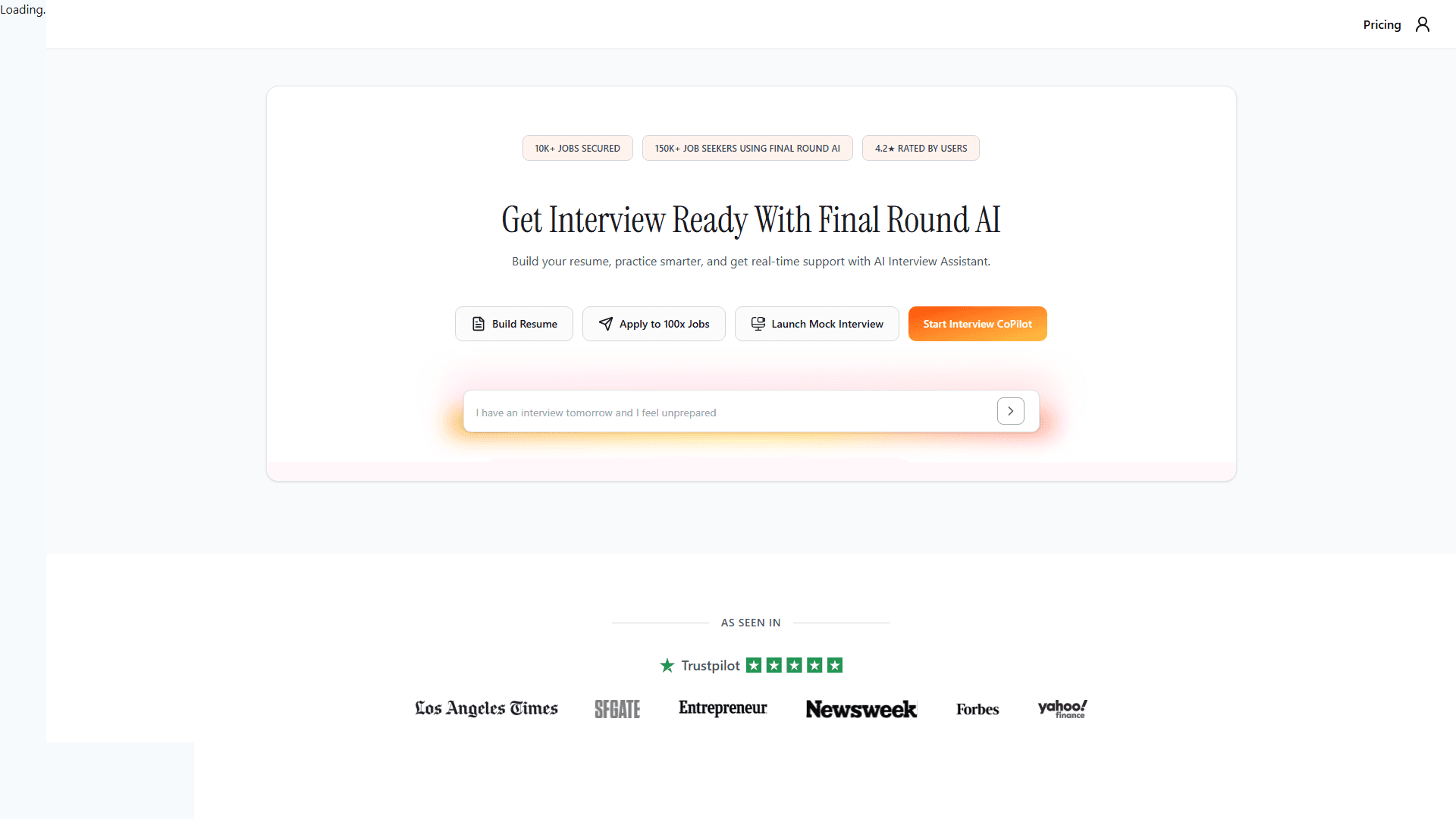
FinalRound AI
AI-powered interview preparation and job application platform with automated job hunting. FinalRound AI applies to jobs for you using AI, provides real-time interview guidance, personalized feedback, resume optimization, and comprehensive interview practice. Automate your job search with AI-driven job applications while preparing for interviews with company-specific prep and mock interviews.
For Engineering (B.Tech/B.E.) Students:
Perfect for plagiarism detection
Key Features:

SolidWorks
3D CAD design software - industry standard for mechanical engineering students
For Engineering (B.Tech/B.E.) Students:
Perfect for plagiarism detection
Key Features:
ChatGPT
ChatGPT is OpenAI's conversational AI assistant powered by GPT-5.2, providing human-like responses for writing, coding, research, problem-solving, and creative tasks. With 180+ million users, it understands context, generates code, analyzes data, and assists with content creation across unlimited conversations, making advanced AI accessible for professionals, students, and businesses worldwide.
For Engineering (B.Tech/B.E.) Students:
Perfect for plagiarism detection
Key Features:

ANSYS
Engineering simulation software for structural, fluid, and electromagnetic analysis
For Engineering (B.Tech/B.E.) Students:
Perfect for plagiarism detection
Key Features:

Onshape
Cloud-based CAD platform - completely free for students with professional-grade features
For Engineering (B.Tech/B.E.) Students:
Perfect for plagiarism detection
Key Features:
VisuAlgo
Free algorithm visualization platform from National University of Singapore (NUS) covering 26+ data structures and algorithms. Provides step-by-step animated visualizations for sorting algorithms (Quick Sort, Merge Sort, Heap Sort), graph algorithms (Dijkstra, BFS, DFS, Kruskal, Prim), tree structures (BST, AVL, Red-Black, Segment Tree), and dynamic programming problems. Used by 2M+ computer science students globally for exam preparation (CS1020, CS2040, CS3230), coding interview prep (FAANG companies), and algorithm complexity analysis (Big-O notation). Each visualization includes pseudocode, time complexity breakdown, and interactive mode for custom input. Created by Dr. Steven Halim and maintained by NUS School of Computing. Alternative to Algorithm Visualizer, USFCA Visualization Tool, and Sorting.at.
For Engineering (B.Tech/B.E.) Students:
Perfect for plagiarism detection
Key Features:
Related Use Cases for Engineering (B.Tech/B.E.)
Engineering students across IITs, NITs, and private colleges face intense scrutiny over plagiarism in project reports, research papers, and thesis submissions. With universities adopting strict anti-plagiarism policies and using institutional tools like Turnitin, even unintentional copying from IEEE papers, GitHub repositories, or technical blogs can lead to academic penalties or delayed degrees. Grammarly's plagiarism detection scans your technical documentation, lab reports, and literature reviews against billions of web pages and academic databases, helping you identify matching content before submission. For B.Tech students juggling semester exams, coding assignments, and placement preparation, Grammarly provides quick plagiarism checks within minutes, supports multiple file formats including DOCX and PDF, and offers citation suggestions in IEEE, APA, and other engineering-standard formats. The tool becomes particularly valuable during final year projects when original research documentation determines your academic standing and influences recruiter perceptions during campus placements.
Top 5 Challenges & AI Solutions
Paraphrasing Technical Content from Research Papers
Engineering students frequently reference IEEE journals, Springer papers, and conference proceedings for literature reviews and project documentation. Simply changing a few words while keeping the sentence structure intact gets flagged as plagiarism by university systems. During final year thesis preparation, students often struggle to rewrite complex technical concepts about machine learning algorithms, circuit designs, or thermodynamic processes in their own words without losing accuracy. This becomes critical when project evaluators specifically check originality percentages before approving submissions.
✨ AI Solution:
Grammarly's plagiarism checker highlights exact matches and similar phrasing from academic sources. The tool shows percentage similarity and identifies specific sentences that need rewriting, allowing you to paraphrase effectively while maintaining technical accuracy.
Checking Multiple Documents Before Submission Deadlines
B.Tech students typically submit 5-7 documents per semester including lab reports, mini project documentation, seminar reports, and assignment papers. Manually checking each document through free online tools consumes hours during exam weeks when time is already limited. Before final submission to university portals or project guides, students need quick verification across all chapters of major project reports, often running 50-100 pages with technical diagrams and code snippets that require separate plagiarism analysis.
✨ AI Solution:
Grammarly allows bulk document uploads and provides plagiarism reports within 2-3 minutes per document. Students can check entire project folders before deadlines, receiving detailed reports that highlight problematic sections across multiple files simultaneously through the desktop application.
Proper Citation of Technical Sources and Code References
Engineering documentation requires citing diverse sources including research papers, technical manuals, GitHub repositories, Stack Overflow solutions, and manufacturer datasheets. Students often miss citations for code snippets adapted from online sources or forget to reference algorithm descriptions borrowed from textbooks. During viva examinations, external examiners specifically question citation accuracy, and incomplete references in project reports can reduce grades significantly, affecting CGPA crucial for placement eligibility in companies like TCS, Infosys, and Wipro.
✨ AI Solution:
Grammarly identifies uncited sources and provides citation format suggestions for IEEE, APA, and MLA styles commonly required in engineering colleges. The citation generator creates properly formatted references that students can directly insert into their bibliography sections.
Detecting Similarity in Collaborative Group Projects
Most B.Tech programs assign group projects where 3-4 students work together on design, implementation, and documentation. When team members divide chapters and later combine documents, overlapping content from shared research or similar phrasing in methodology sections can trigger high similarity scores. This becomes problematic during internal evaluations when each student must submit individual reports on the same project, requiring unique explanations of common technical implementations without appearing copied from teammates.
✨ AI Solution:
Grammarly scans your individual contribution against web sources and previously submitted work. Students can verify their sections maintain originality even when describing shared project components, ensuring each team member's documentation passes university plagiarism thresholds independently.
Avoiding Self-Plagiarism Across Semester Submissions
Engineering students often extend previous semester work into advanced projects, reusing portions of earlier literature reviews, methodology descriptions, or theoretical frameworks. Universities flag self-plagiarism when students submit similar content across different courses or build upon their own published conference papers without proper self-citation. This affects students publishing papers in journals like IEEE or presenting at technical symposiums, where reusing your own published content in thesis chapters requires specific attribution to avoid academic misconduct allegations.
✨ AI Solution:
Grammarly detects matches against your previously submitted documents and published work. The tool helps identify sections requiring self-citation, allowing students to properly reference their earlier work while demonstrating progression in research depth and analysis.
Best Practices for Using AI Tools
Run Grammarly's plagiarism check on draft versions at least 48 hours before final submission to allow time for rewriting flagged sections and re-checking revised content.
Upload your complete project report as a single PDF to get an overall similarity score, then check individual chapters separately to identify specific problematic sections in literature review or methodology.
Schedule plagiarism checks during mid-semester breaks rather than exam week, giving you adequate time to paraphrase technical content without rushing before submission deadlines.
Cross-verify Grammarly results with your university's institutional plagiarism software if available, as different tools access different databases and may show varying similarity percentages.
Maintain a citation tracking document while researching, noting every IEEE paper, technical blog, or GitHub repository you reference to ensure complete bibliography coverage.
Check your summer internship reports and placement preparation documents for plagiarism before sharing with recruiters, as companies increasingly verify candidate authenticity through background checks of submitted work.
Frequently Asked Questions
Does Grammarly detect plagiarism in code snippets and technical diagrams?
Grammarly primarily focuses on text-based plagiarism detection and does not analyze code syntax or image-based diagrams. For code plagiarism, engineering students should use specialized tools like MOSS (Measure of Software Similarity) or JPlag that compare programming logic and structure. However, Grammarly effectively checks explanatory text around code blocks, algorithm descriptions, and technical documentation accompanying your implementations.
How accurate is Grammarly compared to Turnitin used by most engineering colleges?
Grammarly scans billions of web pages and published content but may not access the same institutional databases and student paper repositories that Turnitin maintains through university partnerships. According to comparative studies, Grammarly typically shows 5-10% lower similarity scores than Turnitin for the same document. Students should treat Grammarly as a preliminary check before institutional submission rather than a complete replacement for university-mandated tools.
Can I check my entire 80-page B.Tech project report at once?
Yes, Grammarly Premium allows uploads up to 100,000 words per document, easily accommodating most undergraduate project reports of 80-100 pages. The plagiarism scan typically completes within 3-5 minutes for documents of this length. For faster processing during deadline pressure, consider checking individual chapters separately, focusing first on literature review and methodology sections where plagiarism risks are highest.
Does Grammarly offer student discounts for engineering college students?
Grammarly provides student discounts of approximately 20-30% off the regular Premium subscription when verified through platforms like UNiDAYS or Student Beans using your college email ID. Many IITs and NITs also negotiate institutional licenses that provide free Grammarly Premium access to all enrolled students. Check with your college library or academic office for existing institutional subscriptions before purchasing individual plans.
Will Grammarly flag my paraphrased content as plagiarism?
Grammarly's AI detection analyzes semantic similarity, not just exact word matches, so poorly paraphrased content that retains original sentence structure may still get flagged. Effective paraphrasing requires changing both vocabulary and sentence construction while maintaining technical accuracy. After paraphrasing technical concepts from IEEE papers or textbooks, run another plagiarism check to verify your rewritten version shows acceptable similarity levels below your university's threshold, typically 15-20%.
Can Grammarly check plagiarism in regional language technical reports?
Grammarly currently supports plagiarism detection primarily in English and does not effectively scan documents written in Hindi, Tamil, Telugu, or other regional languages. Engineering students submitting reports in regional languages for state university requirements need alternative tools. However, if your document contains English technical terminology mixed with regional language explanations, Grammarly will check only the English portions against its databases.
How should I cite GitHub repositories and Stack Overflow in my project report?
For GitHub code references, include the repository URL, author username, project name, and access date in IEEE citation format. Stack Overflow answers should cite the question title, answerer's username, posting date, and direct link. Grammarly's citation tool does not automatically generate these web source formats, so manually create citations following your university's prescribed format, then verify through Grammarly that you have acknowledged all adapted code or solutions.
What similarity percentage is acceptable for engineering project reports?
Most engineering colleges set plagiarism thresholds between 15-20% for undergraduate projects, with stricter limits of 10% for M.Tech thesis submissions. This percentage typically excludes bibliography, table of contents, and standard technical definitions. Grammarly displays overall similarity percentage and allows you to review matched sources individually, helping you identify whether flagged content consists of common technical phrases versus actual copied material requiring citation or rewriting.
How to Use AI for Plagiarism Detection: Engineering Step-by-Step Guide
Total time: 2-3 hours
Prepare Your Complete Project Documentation
30 minCompile all chapters of your project report including abstract, literature review, methodology, results, and conclusion into a single Word document or PDF file. Ensure your bibliography is complete with all IEEE papers, textbooks, and online sources you referenced during research. Remove any placeholder text, incomplete sections, or draft notes that might skew plagiarism results. For group projects, clearly separate your individual contribution sections from shared content to check your portions independently.
Tool: Microsoft Word or Google DocsUpload Document to Grammarly Premium
5 minLog into your Grammarly Premium account through the web interface or desktop application. Click the plagiarism checker option and upload your complete project file, which can be up to 100,000 words or approximately 100 pages. Select the plagiarism scan option from the sidebar menu. Wait 3-5 minutes for Grammarly to analyze your document against its database of web pages, academic journals, and published content. The scan time varies based on document length and current server load.
Tool: Grammarly PremiumReview Similarity Report and Matched Sources
45 minExamine the overall similarity percentage displayed at the top of your report. Click on each highlighted sentence or paragraph to see the matching source URL and comparison view. Focus first on high-match sections in your literature review and theoretical framework chapters where citation issues are most common. Differentiate between acceptable matches like standard technical definitions versus problematic copied content requiring rewriting. Note that matches under 3-4 consecutive words are typically common technical phrases and not plagiarism concerns.
Tool: Grammarly PremiumParaphrase Flagged Content and Add Citations
60 minFor each flagged section, decide whether to paraphrase the content in your own words or add a proper citation if direct quotation is necessary. When paraphrasing technical concepts from IEEE papers, change sentence structure completely while maintaining accuracy of algorithms, formulas, or processes described. Use Grammarly's citation generator to create properly formatted references for sources you want to cite directly. Add all new citations to your bibliography section with complete author names, publication years, and DOI numbers as required by IEEE format.
Tool: Grammarly PremiumRe-scan and Verify Final Similarity Score
15 minAfter making all revisions and adding citations, upload your updated document for a second plagiarism check to verify similarity percentage has dropped below your university's acceptable threshold of 15-20%. Review any remaining matches to ensure they are unavoidable technical terms or properly cited quotations. Export the final plagiarism report PDF as proof of originality checking, which some colleges require during project submission. Save both the clean document and plagiarism certificate in your submission folder for external examiner review during viva.
Tool: Grammarly PremiumBest AI Tools for Plagiarism Detection: Engineering Students
| Tool | Best For | Pricing | Rating | Verdict |
|---|---|---|---|---|
| GrammarlyTop PickFree tier | Quick plagiarism checks of technical reports, project documentation, and thesis papers with integrated grammar correction and citation suggestions | Premium starts at ₹850/month, ₹5,400/year with student discount | 4.5/5 | Best all-around tool for engineering students needing both plagiarism detection and writing improvement before project submissions. |
| Turnitin | Institutional-grade plagiarism detection with access to student paper repositories and comprehensive academic databases used by most engineering colleges | Institutional license only, typically ₹200-500 per student annually through college | 4.7/5 | Industry standard for final submissions but requires institutional access, making it unavailable for personal pre-checks before official submission. |
| QuetextFree tier | Free plagiarism checking with limited monthly scans, suitable for quick verification of individual chapters or assignment papers | Free for 3 pages/month, Pro at ₹650/month for unlimited checks | 4.1/5 | Good free alternative for engineering students on tight budgets who need occasional plagiarism checks for smaller documents under 10 pages. |
Engineering (B.Tech/B.E.) Context: What You Need to Know
When You Need This Most
Plagiarism detection becomes critical during 6th and 7th semesters when B.Tech students work on major projects and thesis documentation requiring extensive literature reviews from IEEE journals and conference papers. Final year students face the highest scrutiny during project evaluations and viva examinations where external examiners specifically verify originality percentages.
Career Relevance
Maintaining clean plagiarism records throughout B.Tech protects your academic transcript for placement verification processes at companies like Microsoft, Amazon, and Google that conduct background checks. Strong documentation skills developed through proper citation practices directly benefit technical writing roles, research positions, and higher studies applications to MS programs abroad.
Common Mistakes to Avoid
- ✗Waiting until the night before submission to run plagiarism checks, leaving no time to properly paraphrase flagged sections or add missing citations
- ✗Assuming that changing a few words in copied sentences is sufficient paraphrasing when Grammarly's AI still detects semantic similarity with original sources
- ✗Neglecting to check summer internship reports and seminar documentation for plagiarism, which can surface during placement background verification processes
India-Specific Context
Engineering students preparing for GATE exams or applying to IIMs for MBA programs need clean academic records free from plagiarism allegations that could jeopardize admission chances. Campus placement coordinators increasingly request plagiarism reports for final year projects before allowing students to sit for interviews with top recruiters visiting during placement season.
Related Pages
More Tools for Engineering (B.Tech/B.E.)
Research Paper Writing for Engineering (B.Tech/B.E.)
AI tools for research paper writing specifically designed for Engineering (B.Tech/B.E.) students
Resume & CV Building for Engineering (B.Tech/B.E.)
AI tools for resume & cv building specifically designed for Engineering (B.Tech/B.E.) students
Coding & Programming Help for Engineering (B.Tech/B.E.)
AI tools for coding & programming help specifically designed for Engineering (B.Tech/B.E.) students
Plagiarism Detection for Other Courses
Plagiarism Detection for MBBS/Medicine
Discover plagiarism detection tools tailored for MBBS/Medicine students
Plagiarism Detection for MBA/PGDM
Discover plagiarism detection tools tailored for MBA/PGDM students
Plagiarism Detection for BSc/MSc Sciences
Discover plagiarism detection tools tailored for BSc/MSc Sciences students
Ready to Transform Your Plagiarism Detection Workflow?
Join thousands of Engineering (B.Tech/B.E.) students using AI tools to work smarter and achieve better results with plagiarism detection.