
AI for Literature Review & Research
Complete Guide for Law (LLB/LLM) Students 2026
Find, summarize, and organize academic papers for literature reviews
Quick Answer
Use Elicit to search across 138 million academic papers with natural language questions, automatically screen and extract key legal findings, and organize your research in a structured library. This reduces literature review time from weeks to days while ensuring comprehensive coverage of relevant case law and legal scholarship.
Why Law (LLB/LLM) Students Need AI for Literature Review & Research
Law (LLB/LLM) students face unique challenges when it comes to literature review & research. From managing complex academic assignments to meeting tight deadlines, AI tools can significantly streamline your workflow and improve the quality of your work.
Common Challenges
Finding relevant academic papers
Reading and summarizing dozens of papers
Extracting key findings from studies
Organizing references
Keeping track of citations
How AI Tools Help
AI finds relevant papers based on your topic
Automatic paper summarization
Key findings extraction
Citation management
Semantic search across 200M+ papers
Featured Tool Recommendation
Elicit
Our top recommendation for literature review & research among Law (LLB/LLM) students.
Why Students Love It:
- ✓ Specifically designed for academic use
- ✓ Student discounts available
- ✓ Easy to learn and use
- ✓ Excellent customer support
Recommended AI Tools

Grammarly
Grammarly is an AI-powered writing assistant providing real-time grammar, spelling, punctuation, clarity, and style suggestions across 500,000+ apps and websites. Using advanced NLP, it detects errors, improves tone, checks plagiarism, and offers rewriting suggestions for emails, documents, social media, helping 30+ million users communicate more effectively professionally.
For Law (LLB/LLM) Students:
Perfect for literature review & research
Key Features:
FinalRound AI
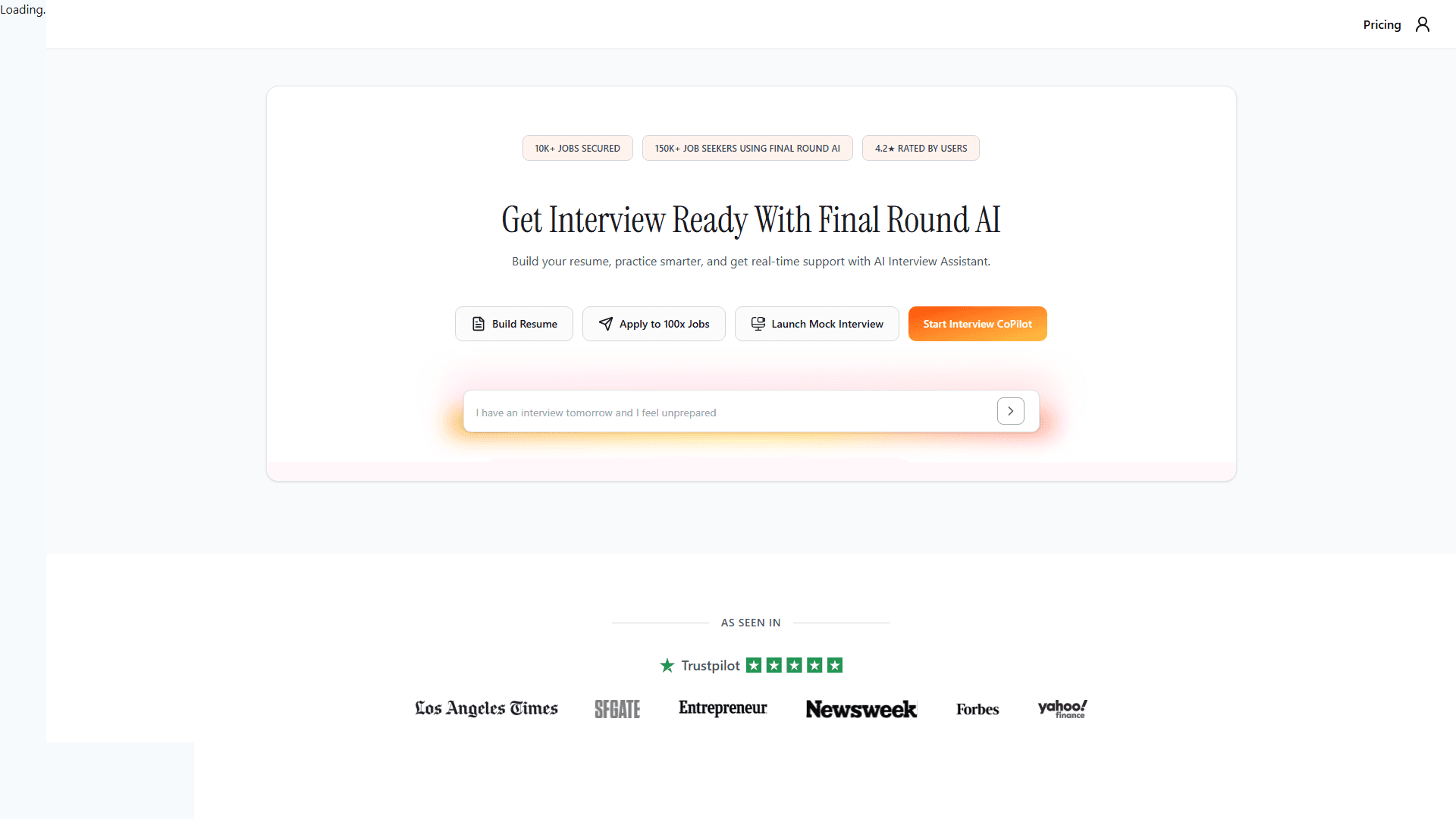
AI-powered interview preparation and job application platform with automated job hunting. FinalRound AI applies to jobs for you using AI, provides real-time interview guidance, personalized feedback, resume optimization, and comprehensive interview practice. Automate your job search with AI-driven job applications while preparing for interviews with company-specific prep and mock interviews.
For Law (LLB/LLM) Students:
Perfect for literature review & research
Key Features:

Westlaw
Legal research platform from Thomson Reuters - essential for law students researching cases and statutes
For Law (LLB/LLM) Students:
Perfect for literature review & research
Key Features:

ChatGPT
ChatGPT is OpenAI's conversational AI assistant powered by GPT-5.2, providing human-like responses for writing, coding, research, problem-solving, and creative tasks. With 180+ million users, it understands context, generates code, analyzes data, and assists with content creation across unlimited conversations, making advanced AI accessible for professionals, students, and businesses worldwide.
For Law (LLB/LLM) Students:
Perfect for literature review & research
Key Features:

LexisNexis
Comprehensive legal research platform - law students access vast legal database and research tools
For Law (LLB/LLM) Students:
Perfect for literature review & research
Key Features:

Casetext
AI-powered legal research platform with CARA AI - law students get smarter case research assistance
For Law (LLB/LLM) Students:
Perfect for literature review & research
Key Features:
Related Use Cases for Law (LLB/LLM)
Research Paper Writing
Write, edit, and format academic research papers with AI assistance for grammar, citations, and academic tone
Plagiarism Detection
Check documents for plagiarism and ensure originality before submission
Citation & Bibliography
Generate accurate citations and bibliographies in multiple formats (APA, MLA, Chicago)
As an LLB or LLM student in India, you often face the daunting task of conducting thorough literature reviews and research amidst a myriad of resources and tight deadlines. With competitive exams and an ever-demanding job market, mastering this skill is crucial. AI tools like Elicit can significantly ease this burden by streamlining your research process, helping you to sift through volumes of legal literature efficiently. Embracing these innovative technologies can give you a competitive edge, enabling you to focus more on understanding concepts rather than getting lost in endless searches.
Top 5 Challenges & AI Solutions
Overwhelming Volume of Resources
Law students face an avalanche of legal texts, cases, and journals, making it hard to identify relevant materials.
✨ AI Solution:
AI tools like Elicit help you filter through vast resources quickly, identifying key studies and legal documents relevant to your research topic.
Time Constraints
Balancing studies, internships, and preparation for competitive exams can leave little time for extensive research.
✨ AI Solution:
With AI-powered tools, you can automate the literature review process, saving you precious hours while improving the quality of your research.
Difficulty in Identifying Gaps
Identifying gaps in existing literature can be challenging, hindering the originality of your research.
✨ AI Solution:
Elicit uses AI to highlight under-researched areas in legal literature, guiding you to develop unique and impactful research questions.
Maintaining Academic Integrity
Citations and referencing can be cumbersome, and improper referencing may lead to academic misconduct.
✨ AI Solution:
AI tools provide automated citation management, ensuring that your references are accurate and conform to legal standards, thus upholding academic integrity.
Dynamic Legal Landscape
The legal field is constantly evolving, making it tough to keep updated with the latest developments.
✨ AI Solution:
AI tools continuously scan and update you on new legal research and publications, ensuring that your literature review reflects the most current information.
Best Practices for Using AI Tools
Define clear research questions to guide your AI tool usage.
Regularly update your search parameters for the latest results.
Use AI-generated insights to complement traditional research methods.
Practice ethical usage by properly citing AI-assisted findings.
Take advantage of tutorials to explore all features of Elicit.
Frequently Asked Questions
What is Elicit and how does it work?
Elicit is an AI research tool designed to streamline literature reviews. It helps you formulate research questions, gather relevant literature, and synthesise findings efficiently, making it ideal for LLB and LLM students.
Is Elicit affordable for students in India?
Elicit offers a variety of pricing plans, including free trials. Given its potential to save time and enhance research quality, it is a worthy investment for serious law students.
Can AI tools improve my research quality?
Absolutely! AI tools like Elicit assist in identifying key literature and gaps in research, leading to a more comprehensive and high-quality literature review that meets academic standards.
Will using AI tools compromise my academic integrity?
No, when used correctly, AI tools can enhance your research while maintaining academic integrity. Always ensure proper citation and reference management.
Are there free alternatives to Elicit?
There are free resources like Google Scholar and ResearchGate, but they may not offer the same level of AI-driven insights and efficiencies that Elicit provides.
How can AI tools help with exam preparation?
AI tools can streamline your studies by helping you quickly gather relevant case laws and legal principles, making your exam preparation more focused and efficient.
Can Elicit help with dissertation research?
Yes! Elicit is particularly useful for dissertation research as it helps in gathering a robust literature base, identifying gaps, and synthesising information seamlessly.
How do I get started with Elicit?
To start with Elicit, simply sign up on their website, explore the tutorials, and begin by entering your research questions to see how it can assist you.
How to Use AI for Literature Review and Research: Law (LLB/LLM) Step-by-Step Guide
Total time: 4-6 hours
Define Your Legal Research Question Clearly
15 minStart by formulating a specific research question. Instead of 'Constitutional law', ask 'What are the judicial principles governing the right to privacy under the Indian Constitution post-Aadhaar judgment'. Write your question in natural language as you would ask a legal expert. This clarity helps Elicit's semantic search find the most relevant cases and articles. Document your research scope, time period, and any specific jurisdictions or statutes you want to focus on.
Tool: Elicit Find PapersSearch for Relevant Cases and Legal Papers
20 minEnter your research question into Elicit's Find Papers search box. Elicit will search across 138 million papers and return the 8 most relevant results with summaries, plus a table of papers. Review the summaries to understand how Elicit interpreted your question. Use the Filter button to narrow results by year of publication, journal quality, or full text availability. Load more papers incrementally up to 100 results to ensure comprehensive coverage of your legal topic.
Tool: Elicit Find Papers with FiltersExtract Key Legal Findings and Holdings
30 minAdd custom columns to Elicit's table to extract specific legal information from papers. For case analysis, create columns like 'Court', 'Year', 'Legal Issue', 'Ratio Decidendi', 'Applicable Statute', and 'Dissenting Opinion'. Elicit's AI automatically populates these columns by analyzing paper content. Review the extracted information and verify accuracy by checking highlighted source text. This structured extraction transforms raw papers into organized legal data you can use directly in your research or arguments.
Tool: Elicit Custom ColumnsOrganize Papers in Your Research Library
25 minSave relevant papers to your Elicit Library for future reference. Import papers from Zotero, Mendeley, or upload PDFs directly. Use Elicit's semantic deduplication feature to automatically identify and merge duplicate cases or articles. Tag papers with custom labels like 'Landmark Judgment', 'Recent Development', or 'Dissenting Opinion'. This organized library becomes your personal legal research database that you can search, filter, and launch new analyses from without re-searching.
Tool: Elicit Library with DeduplicationGenerate Research Reports or Conduct Systematic Review
60-90 minFor quick summaries, use Elicit's Research Report feature to generate a comprehensive overview of your legal topic with citations. For rigorous thesis or research paper work, use Systematic Review to define inclusion criteria, screen papers against those criteria using AI, and extract structured data. Elicit's Systematic Review achieves 96.4 percent screening recall and 94 percent data extraction accuracy. Export your findings as PDF or Word for use in assignments, thesis chapters, or placement portfolio materials.
Tool: Elicit Research Report or Systematic ReviewBest AI Tools for Literature Review and Research: Law (LLB/LLM) Students
| Tool | Best For | Pricing | Rating | Verdict |
|---|---|---|---|---|
| ElicitTop PickFree tier | Comprehensive legal research with automatic case law extraction, systematic reviews for thesis work, and organizing large volumes of judgments and articles | Free plan available; paid plans start at $15/month | 4.5/5 | Best choice for law students. Searches 138 million papers, extracts legal findings automatically, and provides systematic review methodology for thesis-quality research. |
| Perplexity AIFree tier | Quick answers to legal questions and current legal developments, general web search with AI summarization | Free plan available; Pro plan $20/month | 4.2/5 | Good for quick legal research and staying current with recent developments, but lacks specialized legal paper extraction and systematic review features. |
| Google ScholarFree tier | Free access to academic papers and case citations, traditional keyword-based search for Indian and international case law | Free | 4/5 | Essential free resource for law students, but requires manual screening and extraction. Use alongside Elicit for comprehensive research coverage. |
Law (LLB/LLM) Context: What You Need to Know
When You Need This Most
Law students need structured literature review skills most during 3rd and 4th year when thesis work, moot court competitions, and placement preparation intensify. For CLAT/AILET aspirants, efficient legal research becomes critical 6-8 months before exams when comprehensive case law review is necessary.
Career Relevance
Strong legal research skills directly impact placement outcomes at top law firms like Luthra and Associates, AZB and Partners, and Nishith Desai Associates, where candidates are evaluated on research depth and case analysis ability. For judiciary aspirants preparing for UPSC Civil Services or judicial service exams, systematic literature review demonstrates the analytical rigor expected of judges. LLM graduates pursuing academic or research positions require thesis-quality literature reviews that demonstrate comprehensive legal scholarship.
Common Mistakes to Avoid
- ✗Relying only on keyword searches and missing relevant cases that use different legal terminology. Use semantic search instead to find conceptually related judgments.
- ✗Manually reading every paper fully instead of using AI extraction to identify relevant sections first. This wastes 15-20 hours per research project.
- ✗Not documenting search strategy and screening criteria, making your literature review non-reproducible. This is especially problematic for thesis work where examiners expect methodological rigor.
- ✗Forgetting to verify AI-extracted legal findings against original source text. While Elicit is 94 percent accurate, legal citations require precision verification.
- ✗Using only Indian databases and missing relevant international case law and comparative legal scholarship that strengthens arguments.
India-Specific Context
Law students in India face unique challenges with fragmented legal databases. SCC Online, AIR, and Indian Kanoon require separate subscriptions and searches. CLAT and AILET exams test knowledge of landmark Indian judgments that students must identify and understand quickly. Placement at top Indian law firms requires demonstrating familiarity with recent Supreme Court and High Court decisions. Elicit's access to 138 million papers combined with your institutional access to Indian legal databases creates a comprehensive research toolkit. For UPSC Civil Services aspirants, efficient legal research skills are essential for the optional paper and interview preparation.
Related Pages
More Tools for Law (LLB/LLM)
Research Paper Writing for Law (LLB/LLM)
AI tools for research paper writing specifically designed for Law (LLB/LLM) students
Resume & CV Building for Law (LLB/LLM)
AI tools for resume & cv building specifically designed for Law (LLB/LLM) students
Smart Note-Taking for Law (LLB/LLM)
AI tools for smart note-taking specifically designed for Law (LLB/LLM) students
Literature Review & Research for Other Courses
Literature Review & Research for MBBS/Medicine
Discover literature review & research tools tailored for MBBS/Medicine students
Literature Review & Research for BSc/MSc Sciences
Discover literature review & research tools tailored for BSc/MSc Sciences students
Literature Review & Research for Nursing (BSc/MSc Nursing)
Discover literature review & research tools tailored for Nursing (BSc/MSc Nursing) students
Ready to Transform Your Literature Review & Research Workflow?
Join thousands of Law (LLB/LLM) students using AI tools to work smarter and achieve better results with literature review & research.