
Tool DiscoveryTool Discovery

Meta Llama Reddit: What the r/LocalLLaMA Community Really Thinks in 2026

Meta Llama is the most important open-source AI model family on the planet, and r/LocalLLaMA is the community that proves it. The subreddit has grown to over 266,500 members and serves as the de facto home for developers, researchers, and privacy-conscious users who run Llama models on their own hardware instead of sending data to OpenAI or Anthropic. The community explores the gap between open-source AI and commercial models, and that gap has been closing fast with each Llama release. This guide draws from r/LocalLLaMA (266,500+ members), r/MachineLearning, and the broader open-source AI community to explain what Llama actually is, how it compares to GPT-5.2 and Claude, which tools the community uses to run it, and whether the free, local approach is worth the hardware investment.

Updated: 2026-02-249 min read

Running Llama locally gives r/LocalLLaMA users full privacy and offline AI access

Meta Llama model running locally in Ollama interface on a desktop computer

Detailed Tool Reviews

1

Ollama

4.7

The fastest and most developer-friendly way to run Meta Llama and other open-source models locally. r/LocalLLaMA (266,500+ members) consistently recommends Ollama as the top tool for running Llama 3.x with an OpenAI-compatible API, reaching 55 tokens per second on Llama 3.1 8B with a modern GPU.

Key Features:

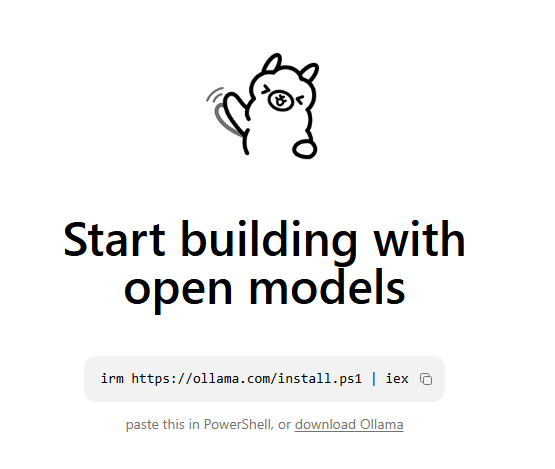
  • One-command model download and run: ollama run llama3
  • OpenAI-compatible API on localhost:11434 for easy app integration
  • Works on Mac (including Apple Silicon), Windows, and Linux
  • Supports Llama 3, Mistral, Qwen, Phi, DeepSeek, and dozens more
  • Pairs with Open WebUI for a ChatGPT-like browser interface

Pricing:

Free (open source)

Pros:

  • + Fastest local inference per r/LocalLLaMA benchmarks (55 tok/s on 8B)
  • + Developer-friendly API makes it easy to build applications on top
  • + Community actively shares Ollama modelfiles and configuration
  • + No data sent to external servers - full offline privacy

Cons:

  • - Command-line interface requires basic terminal comfort
  • - GUI requires installing Open WebUI separately
  • - Model management less visual than LM Studio

Best For:

Developers who want to integrate local Llama into applications using the OpenAI-compatible API, or power users comfortable with command-line tools.

Try Ollama

What Meta Llama is and why r/LocalLLaMA built a community around it

Meta Llama is not an app. It is a family of AI language model weights that Meta releases publicly, meaning anyone can download the model files and run them on their own computer. This is the opposite of how ChatGPT and Claude work: those models run on cloud servers and you send your prompts over the internet. Llama runs locally, on your hardware, with no data leaving your machine.

r/LocalLLaMA formed around this distinction. The community grew to 266,500+ members by 2026 because a specific type of user values what Llama offers: privacy, control, no subscription fees, and the ability to customize models without restrictions.

PropertyMeta Llama (local)ChatGPTClaude
Where it runsYour hardwareOpenAI serversAnthropic servers
Data privacyComplete (never leaves device)Sent to OpenAISent to Anthropic
Monthly cost$0 (hardware only)$0-$20/mo$0-$20/mo
CustomizationFull (fine-tune, modify)NoneNone
Internet requiredNo (after download)YesYes
Model quality (8B)Competitive for most tasksBetter for complex tasksBetter for complex tasks

The r/LocalLLaMA community's framing of Llama is practical rather than ideological. Most members are not opposed to ChatGPT; many use both. They run Llama locally for tasks where privacy matters (sensitive documents, personal information, proprietary code), for building applications without API costs at scale, and for experimenting with AI without usage limits.

"Zero privacy risk if fully local. Your prompts never touch a server." From r/LocalLLaMA community guide on local LLM privacy benefits, describing the fundamental advantage over cloud AI tools.

Llama 3 and its variants (3.1, 3.2, 3.3) represent a meaningful quality jump from earlier open-source models. The r/LocalLLaMA community in 2024-2025 documents Llama 3 models solving reasoning puzzles that GPT-4 refused to attempt, and considers them "competitive for everyday tasks" while acknowledging they trail GPT-5.2 in raw accuracy benchmarks.

Llama model sizes: which one to run for your hardware

The most practical r/LocalLLaMA decision for new users is choosing between model sizes. Llama 3 comes in multiple parameter counts, and the right choice depends entirely on your available VRAM.

Model SizeVRAM RequiredTokens/SecondQuality LevelBest For
Llama 3.2 1B2GB VRAMVery fastBasic tasksQuick lookups, edge devices
Llama 3.2 3B4GB VRAMFastGood everydayLaptops with integrated GPU
Llama 3.1 8B8GB VRAM~55 tok/sStrongMost users, recommended start
Llama 3.1 70B40GB+ VRAMSlow (local)ExcellentProfessionals, multi-GPU
Llama 3.3 70B (quantized)24GB VRAMModerateExcellentHigh-end consumer GPU

The r/LocalLLaMA community recommendation for most users is Llama 3.1 8B as the starting point. It runs well on an 8GB VRAM GPU, delivers strong quality for everyday tasks, and reaches approximately 55 tokens per second on a modern consumer GPU. The community describes it as "the sweet spot between quality and hardware requirements."

Quantization is how the community fits larger models onto smaller GPUs. GGUF is the standard format for quantized models, and Q4_K_M is the most recommended quantization level per r/LocalLLaMA: it reduces memory requirements significantly with minimal quality loss. Q8_0 is recommended when you have the VRAM to spare for better output quality.

The 70B model is the target for users who want quality closest to GPT-5.2. Running it requires either a high-end single GPU (24GB VRAM with aggressive quantization) or multiple consumer GPUs. r/LocalLLaMA has detailed thread discussions on multi-GPU setups for 70B, but the community generally recommends API access to a cloud provider as a more practical alternative to local 70B for most users.

"Start with Llama 3.1 8B on Ollama. If it is not good enough for your use case, then consider either the 70B quantized or API access. Most everyday tasks don't need more than 8B." Community advice pattern from r/LocalLLaMA beginner threads, 2025.

Ollama vs LM Studio vs Jan: the community tool comparison

Three tools dominate how the r/LocalLLaMA community runs Llama models locally. The community has clear preferences based on use case.

Ollama is the developer community favorite. You run one command to download and start any supported model, get an OpenAI-compatible API on localhost:11434 immediately, and can integrate with dozens of existing tools that use the OpenAI API format. The r/LocalLLaMA benchmark community documents Ollama at approximately 55 tokens per second on Llama 3.1 8B with a modern consumer GPU.

LM Studio is the beginner-friendly GUI alternative. It includes a built-in model browser for discovering and downloading models from Hugging Face, a chat interface that works without any command-line interaction, and excellent Apple Silicon optimization. The r/LocalLLaMA community specifically recommends LM Studio for Mac users and for anyone who is not comfortable with terminal commands.

Jan.ai positions itself as a complete ChatGPT replacement that runs entirely locally. The community describes it as "100% offline, privacy-first" with a polished interface similar to the ChatGPT web app. It can use Ollama as a backend, giving users the GUI convenience with Ollama's performance.

ToolInterfaceBest HardwareSpeed (8B)APICommunity Verdict
OllamaCLI + APIAny55 tok/sYes (OpenAI-compat)Best for developers
LM StudioFull GUIMac (M-series)53 tok/sYesBest for beginners
Jan.aiGUI (polished)Any52 tok/sYesBest ChatGPT replacement
llama.cppCLIAnyFastLimitedFor advanced users
GPT4AllGUIAnySlowerLimitedGood for privacy-focused beginners

Performance differences between Ollama, LM Studio, and Jan are under 5% per community benchmarks. The choice is primarily about interface preference and use case, not raw speed.

Llama vs competing open-source models: what r/LocalLLaMA says

Llama is not the only open-source model the r/LocalLLaMA community runs, and the most interesting community discussions in 2024-2025 involve comparing Meta's models against alternatives from Mistral, Alibaba (Qwen), Microsoft (Phi), and DeepSeek.

The community tracks these comparisons closely because model quality at specific hardware constraints is the central r/LocalLLaMA interest. A thread about DeepSeek gathered 2,316 upvotes on r/LocalLLaMA, making it one of the highest-engagement posts about an open-source model in the community's history.

How the community evaluates each model family:

  • Llama 3.x: Meta's flagship, best ecosystem support, widest tool compatibility, competitive on most tasks
  • Mistral 7B/Mixtral: praised for quality-to-size ratio, strong coding, efficient on smaller hardware
  • Qwen 2.5: Alibaba's contribution, strong multilingual performance, active community engagement
  • Phi-3/Phi-4: Microsoft's small model series, "surprisingly capable" at 3-4B parameters per community reports
  • DeepSeek: Chinese AI lab models, drew massive community excitement for reasoning quality

The 2025 pattern in r/LocalLLaMA is that no single model wins across all tasks. The community maintains a mental model of which model to reach for based on the task:

  • Everyday chat and writing: Llama 3.1 8B or Llama 3.3 70B
  • Coding tasks: Qwen Coder or DeepSeek Coder variants
  • Multilingual work: Qwen 2.5 series
  • Small hardware (under 4GB VRAM): Phi-3 mini

"DeepSeek release was one of the most exciting days in r/LocalLLaMA history. 2316 upvotes. Open weights, strong reasoning, competitive with much larger models." From r/LocalLLaMA 2024 year-end recap discussion.

The commercial use question comes up regularly. Meta's Llama license allows commercial use for most companies but has restrictions for entities with over 700 million monthly active users. This is not an issue for most developers and small businesses, but enterprise users at scale check the license terms directly.

Who actually switches from ChatGPT to local Llama: the honest community answer

r/LocalLLaMA has enough cross-posts from r/ChatGPT and r/artificial to understand who actually switches from cloud AI to local Llama, and why. The answer is more nuanced than "privacy advocates," and the reasons are practical.

The actual switching motivations from community discussions:

  • Developers building applications where API costs at scale are prohibitive
  • Users handling sensitive documents (legal, medical, financial) who cannot send data to cloud
  • Researchers who need to run large numbers of queries without rate limits
  • Privacy-conscious users who object to their conversations being used for training
  • Enthusiasts who enjoy the technical challenge of local AI setup
  • Users in regions where cloud AI services are restricted or unavailable

What does not drive switching per the community's honest self-assessment:

  • Quality equivalence: the community acknowledges Llama 3 8B is not as capable as GPT-5.2 for complex reasoning
  • Convenience: ChatGPT is easier to access and requires no hardware investment
  • Feature parity: local models lack real-time search, voice interaction, and image generation by default

The community workaround stack for local AI completeness:

  • Open WebUI + Ollama: browser-based chat interface similar to ChatGPT
  • LM Studio: GUI with model management
  • RAG (Retrieval Augmented Generation): gives local models access to your documents
  • SearXNG or Brave Search API: adds web search capability to local models

"Running local is not about beating ChatGPT. It is about having AI that cannot be taken away, rate-limited, or charged for. For sensitive tasks at scale, local wins every time." Community framing from r/LocalLLaMA frequently cited in new user threads.

The practical recommendation from r/LocalLLaMA for new users: use Ollama + Open WebUI as your local AI stack alongside ChatGPT or Claude for tasks that need cloud-level reasoning. Most members use both, not one exclusively.

Frequently Asked Questions

Meta Llama is a family of open-source AI language models released by Meta. Unlike ChatGPT or Claude, Llama model weights are publicly downloadable and can run on your own hardware. The r/LocalLLaMA community (266,500+ members) uses Llama for local, private AI without sending data to external servers.

The r/LocalLLaMA verdict on Meta Llama in 2026

Meta Llama is the foundation of the open-source AI movement, and r/LocalLLaMA (266,500+ members) is the community that has made running local AI accessible to developers and privacy-conscious users who previously had no alternative to cloud services. Llama 3.1 8B running on Ollama is the community's recommended starting point: competitive quality for everyday tasks, free after hardware, zero data privacy concerns, and no rate limits. For complex reasoning tasks, the community uses cloud models alongside their local setup rather than treating it as either/or.

About the Author

Amara - AI Tools Expert

Amara

Amara is an AI tools expert who has tested over 1,800 AI tools since 2022. She specializes in helping businesses and individuals discover the right AI solutions for text generation, image creation, video production, and automation. Her reviews are based on hands-on testing and real-world use cases, ensuring honest and practical recommendations.

View full author bio

Related Guides