
AI for Data Analysis & Visualization
Complete Guide for Engineering (B.Tech/B.E.) Students 2026
Analyze datasets, create visualizations, and extract insights using AI
Quick Answer
Julius AI allows engineering students to analyze lab data, create visualizations, and run statistical tests using plain English prompts instead of Python or R code. Upload your CSV or Excel file, ask questions about your dataset, and receive publication-ready charts and statistical summaries within seconds, ideal for lab reports and final year projects.
Why Engineering (B.Tech/B.E.) Students Need AI for Data Analysis & Visualization
Engineering (B.Tech/B.E.) students face unique challenges when it comes to data analysis & visualization. From managing complex technical projects to meeting tight deadlines, AI tools can significantly streamline your workflow and improve the quality of your work.
Common Challenges
Understanding complex datasets
Creating meaningful visualizations
Statistical analysis without coding
Interpreting data for reports
Presenting data findings
How AI Tools Help
Natural language data queries
Automatic chart and graph generation
Statistical analysis without coding
Excel and CSV file support
Export-ready visualizations
Featured Tool Recommendation
Julius AI
Our top recommendation for data analysis & visualization among Engineering (B.Tech/B.E.) students.
Why Students Love It:
- ✓ Specifically designed for academic use
- ✓ Student discounts available
- ✓ Easy to learn and use
- ✓ Excellent customer support
Recommended AI Tools

ANSYS
Engineering simulation software for structural, fluid, and electromagnetic analysis
For Engineering (B.Tech/B.E.) Students:
Perfect for data analysis & visualization
Key Features:
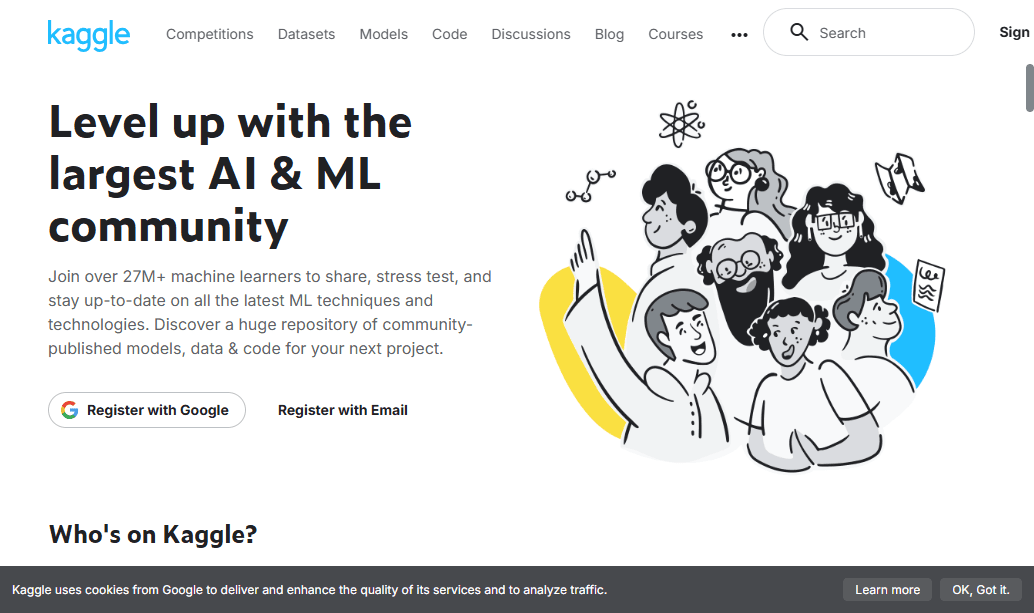
Kaggle
World's largest data science community with datasets, competitions, and notebooks - essential for DS students
For Engineering (B.Tech/B.E.) Students:
Perfect for data analysis & visualization
Key Features:

ChatGPT
ChatGPT is OpenAI's conversational AI assistant powered by GPT-5.2, providing human-like responses for writing, coding, research, problem-solving, and creative tasks. With 180+ million users, it understands context, generates code, analyzes data, and assists with content creation across unlimited conversations, making advanced AI accessible for professionals, students, and businesses worldwide.
For Engineering (B.Tech/B.E.) Students:
Perfect for data analysis & visualization
Key Features:
Related Use Cases for Engineering (B.Tech/B.E.)
Engineering students across IITs, NITs, and private colleges face mounting pressure to analyze complex datasets for lab reports, final year projects, and placement interviews. Whether you're working with sensor data in IoT projects, analyzing circuit performance in VLSI labs, or presenting machine learning model results, creating professional visualizations without extensive coding knowledge becomes a major bottleneck. Julius AI addresses this challenge by allowing B.Tech students to upload CSV, Excel, or PDF files and ask questions in plain English to generate statistical summaries, charts, and predictive models. During placement season, when companies like TCS, Infosys, and product startups test your data interpretation skills through case studies, having a tool that produces publication-ready graphs in seconds gives you a competitive edge. The platform handles everything from basic descriptive statistics for your thermodynamics lab report to advanced regression analysis for your capstone project, eliminating the need to master matplotlib, seaborn, or ggplot2 syntax while focusing on engineering insights that matter.
Top 5 Challenges & AI Solutions
Converting Raw Lab Data into Meaningful Visualizations
Engineering labs generate massive datasets from experiments in heat transfer, signal processing, or materials testing. Manually plotting graphs in Excel consumes hours during exam week when you need to submit five lab reports simultaneously. Creating scatter plots, histograms, and regression lines requires understanding both the data structure and visualization libraries. Most students end up with poorly formatted charts that lose marks in viva voce sessions where professors question your data interpretation skills and presentation quality.
✨ AI Solution:
Julius AI's natural language interface lets you upload your experimental CSV file and type 'create a scatter plot of temperature vs. time with trend line' to generate professional visualizations instantly, saving 2-3 hours per lab report.
Running Statistical Tests Without R or Python Knowledge
Final year projects in mechanical, civil, or electronics engineering demand statistical validation through ANOVA, t-tests, or correlation analysis. Learning R or Python syntax while juggling GATE preparation and placement drives proves overwhelming for most students. Professors expect you to justify your conclusions with p-values and confidence intervals, but coding errors in statistical libraries delay your project timeline. Without proper statistical backing, your thesis defense becomes vulnerable to panel questions about data reliability and experimental validity.
✨ AI Solution:
Julius AI performs ANOVA, regression, and hypothesis testing through simple prompts like 'run t-test comparing group A and B', delivering results with interpretation in under 60 seconds without any coding required.
Interpreting Complex Datasets for Project Reports
Capstone projects involving sensor networks, financial modeling, or supply chain optimization generate datasets with 50+ variables that overwhelm traditional spreadsheet analysis. Understanding which variables correlate, identifying outliers, and extracting actionable insights requires statistical expertise most undergraduates lack. Placement interviews at analytics firms like Mu Sigma or Fractal Analytics test your ability to derive business insights from messy data. Spending days cleaning data and running exploratory analysis manually leaves little time for actual engineering problem-solving in your final semester.
✨ AI Solution:
Julius AI's automated exploratory data analysis generates summary statistics, correlation matrices, and outlier detection reports through one prompt, completing in minutes what traditionally takes days of manual Excel work.
Creating Publication-Ready Graphs for IEEE Papers
Submitting research papers to IEEE conferences or Springer journals requires high-quality, publication-standard visualizations with proper axis labels, legends, and formatting. Engineering students struggle with matplotlib customization or MATLAB plotting functions to meet journal guidelines. Reviewers reject papers with poorly presented data, regardless of technical merit. During conference deadlines, formatting 15-20 graphs to match IEEE standards while completing coursework creates severe time pressure. Most students lack design skills to make their technical findings visually compelling for academic audiences.
✨ AI Solution:
Julius AI generates clean, customizable charts that meet academic publication standards. Export options include high-resolution PNG and vector formats suitable for direct inclusion in LaTeX documents or conference presentations.
Presenting Data Insights During Placement Interviews
Product companies like Amazon, Flipkart, and Microsoft include data interpretation rounds where you analyze a business dataset and present findings within 30 minutes. Engineering students with strong coding skills often fail these rounds due to poor communication of statistical insights. Interviewers expect you to identify trends, anomalies, and recommendations without getting lost in technical jargon. Campus placement coordinators report that students lose offers because they cannot translate data patterns into business language. Creating compelling visual narratives from raw numbers requires practice most technical students lack.
✨ AI Solution:
Julius AI's report generation feature creates polished summaries with key insights highlighted, helping you practice translating technical findings into business recommendations that impress placement panels and case study evaluators.
Best Practices for Using AI Tools
Upload clean datasets to Julius AI by removing merged cells and ensuring consistent date formats in your Excel files before analysis to avoid parsing errors.
Start every project analysis with Julius AI's automated summary statistics to understand data distribution before diving into complex visualizations or modeling tasks.
Schedule your data analysis sessions 3-4 days before lab report deadlines to allow time for result interpretation and addressing any anomalies the AI identifies.
Cross-verify critical statistical results from Julius AI with manual calculations for at least one sample to ensure accuracy before including them in thesis submissions.
Always cite Julius AI as a data analysis tool in your project acknowledgments and maintain original datasets to demonstrate academic integrity during viva examinations.
Practice data interpretation with Julius AI using previous years' project datasets available in college repositories to prepare for placement analytics rounds at companies visiting your campus.
Frequently Asked Questions
Can Julius AI handle large datasets from IoT sensors or simulation software used in engineering projects?
Julius AI supports CSV, Excel, and text files up to several hundred megabytes, easily accommodating typical engineering datasets from MATLAB simulations, Arduino sensors, or ANSYS outputs. For extremely large files exceeding platform limits, you can sample your data or split it into manageable chunks while maintaining statistical validity.
Will using Julius AI for lab reports be considered cheating by my college's academic integrity policy?
Julius AI is a data analysis tool similar to Excel or MATLAB, not a content generator that writes reports for you. Using it to create visualizations and run statistical tests is academically acceptable, but you must interpret results yourself and cite the tool in your methodology section. Always check your specific college guidelines regarding AI tool usage.
How much does Julius AI cost for engineering students preparing for placements and final year projects?
Julius AI offers a free tier with basic data analysis and visualization capabilities sufficient for most lab reports and coursework. Paid plans start around $20 per month and include advanced features like machine learning modeling and unlimited file uploads, useful during intensive final year project work.
Can Julius AI generate code in Python or R that I can include in my project documentation?
Yes, Julius AI can export the Python code it uses internally for your analysis, allowing you to include reproducible code snippets in your project appendix. This feature helps satisfy project requirements where professors demand to see the analytical methodology behind your visualizations and statistical tests.
Does Julius AI work with data from specialized engineering software like AutoCAD, CATIA, or LabVIEW?
Julius AI works with standard data formats like CSV and Excel, so you need to export your data from specialized engineering software first. Most CAD and simulation tools have export functions that create compatible files, making the integration straightforward for typical engineering workflows.
How quickly can Julius AI analyze datasets during time-pressured placement case study rounds?
Julius AI typically generates summary statistics, visualizations, and basic insights within 30-60 seconds of uploading your dataset. This speed makes it practical for 30-minute case study rounds common in placement interviews at analytics and product companies visiting engineering campuses.
Can Julius AI help with machine learning projects required in Computer Science and AI specializations?
Julius AI includes machine learning capabilities for training models like regression, classification, and clustering using natural language commands. While it handles common ML tasks well, complex deep learning projects may still require frameworks like TensorFlow or PyTorch for full customization and research-level work.
Is Julius AI accessible on mobile devices for quick analysis during lab sessions or field work?
Julius AI works through a web browser, making it accessible on smartphones and tablets during field measurements or lab sessions. However, the interface is optimized for desktop use, so complex visualizations and detailed analysis are better performed on laptops for proper review before submission.
How to Use AI for Data Analysis & Visualization: Engineering (B.Tech/B.E.) Step-by-Step Guide
Total time: 2-3 hours
Prepare and Upload Your Engineering Dataset
15 minExport your experimental data from LabVIEW, MATLAB, or sensor logs into CSV or Excel format. Clean the file by removing merged cells, ensuring consistent decimal formats, and adding clear column headers describing each variable. Upload the file to Julius AI using the paperclip icon and wait for the automatic data preview to confirm successful parsing of your engineering measurements.
Tool: Julius AIGenerate Automated Summary Statistics
10 minAsk Julius AI to 'provide summary statistics for all variables' to receive mean, median, standard deviation, and range for your dataset. Review these statistics to identify any data entry errors or sensor malfunctions that produced impossible values. This exploratory step helps you understand your data distribution before creating visualizations, ensuring your lab report conclusions rest on valid measurements.
Tool: Julius AICreate Required Visualizations for Your Report
30 minType specific visualization requests like 'create scatter plot of voltage vs. current with linear regression' or 'generate histogram of temperature readings'. Julius AI produces publication-quality graphs with proper axis labels and legends. Download each visualization as high-resolution PNG files for insertion into your lab report or project documentation, ensuring they meet your college's formatting guidelines.
Tool: Julius AIRun Statistical Tests and Validation
45 minRequest specific statistical analyses relevant to your project, such as 'perform ANOVA to compare three material samples' or 'calculate correlation between pressure and flow rate'. Julius AI executes the tests and provides p-values, confidence intervals, and interpretation guidance. Copy these results into your analysis section, ensuring you understand what each statistical measure indicates about your experimental hypothesis before the viva.
Tool: Julius AIGenerate Report Summary and Export Results
40 minAsk Julius AI to 'create a summary of key findings' to receive a structured overview of your data insights, trends, and statistical conclusions. Use this AI-generated summary as a reference while writing your discussion section, ensuring you address all significant patterns in your data. Export all visualizations, statistical outputs, and code snippets for your project appendix, maintaining academic integrity by citing Julius AI in your methodology.
Tool: Julius AIBest AI Tools for Data Analysis & Visualization: Engineering (B.Tech/B.E.) Students
| Tool | Best For | Pricing | Rating | Verdict |
|---|---|---|---|---|
| Julius AITop PickFree tier | Quick statistical analysis and visualization for lab reports without coding knowledge | Free tier available, paid plans from $20/month | 4.5/5 | Best choice for engineering students needing fast, publication-ready visualizations during exam season and placement preparation. |
| ChatGPT with Advanced Data Analysis | General purpose data exploration and code generation for custom analysis workflows | $20/month for ChatGPT Plus | 4.3/5 | Useful for learning data analysis concepts but requires more manual formatting compared to specialized tools like Julius AI. |
| Google Colab with PandasFree tier | Free Python-based analysis when you have time to code and want full customization | Free | 4/5 | Ideal for computer science students comfortable with Python, but has a steeper learning curve than no-code AI alternatives. |
Engineering (B.Tech/B.E.) Context: What You Need to Know
When You Need This Most
Engineering students need data analysis skills most intensively during 6th and 7th semesters when final year projects begin, and during 8th semester when thesis submissions and placement interviews overlap with tight deadlines.
Career Relevance
Data analysis proficiency opens roles in analytics firms like Mu Sigma and Fractal, product companies requiring A/B testing skills, core engineering positions demanding process optimization, and consulting firms where case study performance determines selection. Companies increasingly test data interpretation during technical rounds even for non-analytics positions.
Common Mistakes to Avoid
- ✗Uploading poorly formatted Excel files with merged cells or inconsistent data types that cause Julius AI parsing errors and waste analysis time
- ✗Blindly trusting AI-generated statistical results without verifying at least one calculation manually, risking errors in thesis defense
- ✗Starting data analysis the night before lab report deadlines instead of maintaining a regular workflow throughout the semester
India-Specific Context
Campus placements at tier-1 engineering colleges increasingly include data interpretation rounds where tools like Julius AI help practice rapid analysis. Students preparing for GATE or GRE while managing projects benefit from time saved on visualization tasks, and those targeting analytics roles at Flipkart, Amazon, or startups need portfolio projects demonstrating data storytelling skills.
Related Pages
More Tools for Engineering (B.Tech/B.E.)
Research Paper Writing for Engineering (B.Tech/B.E.)
AI tools for research paper writing specifically designed for Engineering (B.Tech/B.E.) students
Resume & CV Building for Engineering (B.Tech/B.E.)
AI tools for resume & cv building specifically designed for Engineering (B.Tech/B.E.) students
Coding & Programming Help for Engineering (B.Tech/B.E.)
AI tools for coding & programming help specifically designed for Engineering (B.Tech/B.E.) students
Data Analysis & Visualization for Other Courses
Data Analysis & Visualization for Computer Science (BCA/MCA)
Discover data analysis & visualization tools tailored for Computer Science (BCA/MCA) students
Data Analysis & Visualization for Data Science/Analytics
Discover data analysis & visualization tools tailored for Data Science/Analytics students
Data Analysis & Visualization for CA/CS/CMA
Discover data analysis & visualization tools tailored for CA/CS/CMA students
Ready to Transform Your Data Analysis & Visualization Workflow?
Join thousands of Engineering (B.Tech/B.E.) students using AI tools to work smarter and achieve better results with data analysis & visualization.