Tool DiscoveryTool Discovery

Local LLM Reddit: What the Privacy-First AI Community Really Thinks in 2026

Running AI locally on your own hardware has moved from a technical curiosity to a practical workflow for developers, privacy advocates, and anyone tired of cloud AI rate limits and subscription costs. The r/LocalLLaMA community (266,500+ members) is the center of this movement, alongside r/homelab and r/privacy where users share hardware setups, tool recommendations, and use cases for AI that never leaves their machine. This guide pulls from those communities to explain why people choose local LLMs over ChatGPT and Claude, which tools make it easiest to get started, what hardware you actually need, and which models the community considers best for different tasks in 2026.

Updated: 2026-02-249 min read

Open WebUI connected to Ollama gives users a ChatGPT-like interface that never leaves their machine

Local LLM running in Open WebUI interface showing Ollama connection and private AI chat

Detailed Tool Reviews

1

Ollama

4.8

The r/LocalLLaMA community's top-rated tool for running AI models locally, reaching 55 tokens per second on Llama 3.1 8B. One command downloads and runs any model from a library of 100+ including Llama, Mistral, Qwen, DeepSeek, and Phi. Pairs with Open WebUI for a browser-based interface identical in feel to ChatGPT.

Key Features:

  • ollama run [model-name]: one command to start any supported model
  • OpenAI-compatible API: drop-in replacement for existing app integrations
  • Model library: 100+ models including Llama 3, Mistral, DeepSeek, Qwen
  • Automatic GGUF quantization selection for your hardware
  • Works on Mac (M-series and Intel), Windows, and Linux

Pricing:

Free (open source)

Pros:

  • + Fastest local inference at 55 tok/s on Llama 3.1 8B per community benchmarks
  • + OpenAI API compatibility works with hundreds of existing tools
  • + Zero data leaves your machine, complete privacy
  • + Free, no account required, no rate limits

Cons:

  • - Command-line interface, no built-in GUI
  • - Requires installing Open WebUI separately for browser chat
  • - Model storage can be large (4-40GB per model)

Best For:

Developers integrating local AI into applications, or users who want maximum performance and don't mind command-line tools.

Try Ollama

Why people run AI locally: the real reasons from Reddit

The r/LocalLLaMA community is not a monolith. Its 266,500 members have different primary motivations for local AI, and understanding those motivations clarifies when local LLMs are genuinely the right choice and when cloud AI is more practical.

The actual reasons people choose local AI per community discussions:

MotivationCommunity PrevalenceWho This Applies To
Privacy (no data sent to cloud)Very highLegal, medical, financial work; personal data
No subscription cost at scaleHighDevelopers building apps, high-volume users
No rate limitsHighResearchers, automated pipelines
Offline/air-gapped useModerateSecure environments, remote locations
Customization (fine-tuning)ModerateResearchers, specialized applications
Technical curiosityModerateEnthusiasts, learners
Censorship avoidanceLowerVaries by use case

Privacy is the most consistently cited reason. r/LocalLLaMA members who work with sensitive documents (contracts, medical records, financial data, proprietary code) describe the peace of mind from knowing their prompts never leave their machine. Unlike ChatGPT, which sends every message to OpenAI's servers, local LLMs process everything on your hardware.

The cost argument is real for developers. ChatGPT API pricing at scale can reach hundreds or thousands of dollars per month for high-volume applications. Local LLMs eliminate the per-token cost entirely, with hardware amortized over years of use.

"Zero privacy risk if fully local. Your prompts never touch a server. For sensitive client documents, this is not optional." From r/LocalLLaMA community guide on privacy benefits of local AI, widely cited in new member threads.

What does not drive switching: raw quality equivalence. The community is honest that Llama 3.1 8B running locally does not match GPT-5.2 for complex reasoning. The choice to run locally is about trade-offs, not claiming parity.

The best local LLM stack: what r/LocalLLaMA actually uses

The r/LocalLLaMA community has converged on a standard stack for local AI that covers the main use cases. The core is Ollama for model management and inference, with Open WebUI added for users who want a browser-based chat interface.

The community-recommended setup for most users:

  • Ollama: download and run any model with one command, provides the API
  • Open WebUI: browser-based interface that connects to Ollama, looks and feels like ChatGPT
  • Model choice: Llama 3.1 8B for general use, specialized models for coding or multilingual tasks

The Ollama installation is a single command on Mac/Linux. On Windows, it is a standard installer. Once running, models download automatically the first time you request them. A fresh Ollama install with Llama 3.1 8B takes under 10 minutes for users with a decent internet connection for the initial 4-6GB download.

ToolRoleBest For
OllamaModel runner + APIAll users as the foundation
Open WebUIBrowser chat interfaceUsers who want ChatGPT-like experience
LM StudioAll-in-one GUIBeginners, Mac/Apple Silicon users
Jan.aiPrivacy-first chat appUsers who want polished standalone app
AnythingLLMRAG + chatUsers processing their own documents

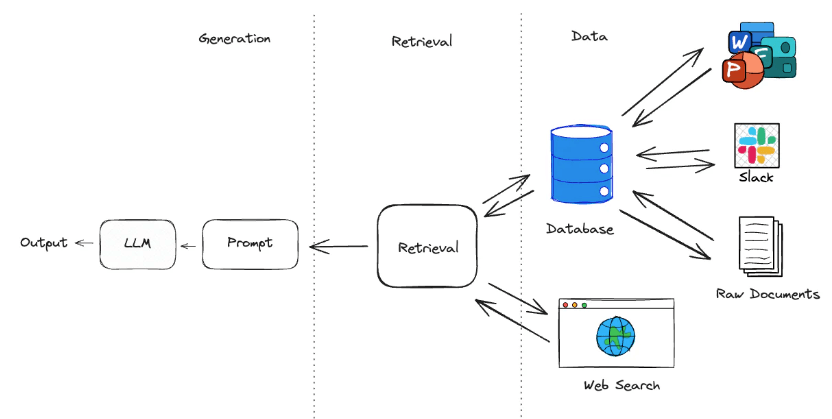
AnythingLLM is worth highlighting because r/LocalLLaMA uses it specifically for Retrieval Augmented Generation (RAG): connecting local AI to your own documents so it can answer questions about PDFs, text files, and other content without sending those documents to the cloud. This is the use case that brings many professionals into the local LLM space.

"Ollama on port 11434 with Open WebUI. Takes 10 minutes to set up. After that you have a completely private ChatGPT running on your own machine." Community setup guide summary from r/LocalLLaMA new member resources, 2025.

Best local LLM models in 2026: the community ranking

r/LocalLLaMA tracks model quality closely and maintains informal community rankings based on member testing across different hardware configurations. The landscape in 2026 includes models from multiple labs, with Llama, Mistral, Qwen, DeepSeek, and Phi as the main families.

The community consensus model ranking for different tasks:

TaskTop Model ChoiceRunner-UpNotes
General chatLlama 3.3 70B (quantized)Llama 3.1 8BSize dependent
CodingQwen Coder 32B or DeepSeek CoderLlama 3.1 8BSpecialized models win
MultilingualQwen 2.5Llama 3.1 8BQwen trained on more languages
Low hardware (4GB)Phi-3 mini or Llama 3.2 3BMistral 7BSmall but capable
ReasoningDeepSeek R1 (distilled)Llama 3.3 70BDeepSeek moment in 2025

DeepSeek generated the most community excitement in 2024-2025, with a model release thread gathering over 2,300 upvotes on r/LocalLLaMA. The community response to DeepSeek R1 was that its reasoning quality was competitive with much larger models, making it especially interesting for the local AI use case where size-to-quality ratio is critical.

The Phi-3 series from Microsoft surprised the community with its performance at 3-4 billion parameters. r/LocalLLaMA threads consistently describe it as "surprisingly capable" for a model that runs on very low-end hardware, making it the top recommendation for users with older machines or limited VRAM.

For most users starting out, the r/LocalLLaMA recommendation is straightforward: run Llama 3.1 8B first. Test it for your actual use cases. If it handles them well, you are done. If specific tasks consistently fall short, explore the specialized alternatives.

Hardware for local LLMs: what you actually need per community specs

Hardware requirements are the most practical barrier for new local LLM users, and r/LocalLLaMA has extensive archived discussions with specific numbers. The community's advice is more accessible than it looks from the outside.

The minimum setup to run a useful model on CPU only requires nothing beyond a standard modern computer. Llama 3.2 3B running on CPU produces 2-5 tokens per second, which is slow but usable for occasional tasks. The experience is similar to watching a slow typist.

VRAM is the critical resource for good performance:

VRAMBest ModelTypical SpeedExperience
4GB GPULlama 3.2 3B (Q4)10-15 tok/sUsable for basic tasks
6GB GPULlama 3.1 8B (Q4)20-25 tok/sGood for most tasks
8GB GPULlama 3.1 8B (Q8)40-55 tok/sSmooth, recommended
12-16GB GPULlama 3.1 8B + ControlNet55+ tok/sProfessional quality
24GB GPULlama 3.3 70B (Q4_K_M)15-25 tok/sExcellent quality

Apple Silicon is the community's praised architecture for local AI. MacBook Pro M3 Pro (18-36GB unified memory) and Mac Mini M4 handle models significantly larger than PC equivalents with the same nominal memory because Apple's unified memory architecture is more efficient for LLM inference. r/LocalLLaMA has multiple threads documenting Mac users running 70B models that would require 40GB+ dedicated VRAM on a PC.

Cloud GPU rental is the practical alternative for users who want to run larger models without hardware investment. RunPod and Vast.ai are the most recommended services in r/LocalLLaMA threads, offering hourly GPU rental starting at approximately $0.30/hour for RTX 3090 class hardware.

"M3 Pro MacBook Pro with 36GB unified memory runs Llama 3.3 70B at 15 tok/s. Comparable to a PC with a 3x900 setup. Apple Silicon for local AI is genuinely impressive." From r/LocalLLaMA hardware comparison thread, 2025.

Common local LLM beginner mistakes: what r/LocalLLaMA says to avoid

r/LocalLLaMA new member threads and the community FAQ document the same mistakes repeatedly. Understanding them before you start saves significant frustration.

The most common beginner mistakes per the community:

  • Choosing a model too large for available hardware, then blaming the model for being "slow" or "broken"
  • Running CPU-only for extended use without understanding the speed implications (2-5 tok/s vs 50+ tok/s on GPU)
  • Not using GGUF quantized models (trying to run full-precision models that will not fit in VRAM)
  • Installing multiple conflicting tools and services on the same machine before understanding the stack
  • Expecting local 8B models to match GPT-4o performance on complex reasoning tasks

The hardware fit issue is the biggest source of frustration in new user posts. An 8B model in full precision (FP16) needs approximately 16GB VRAM. The same model in Q4_K_M quantization needs approximately 4-5GB VRAM. New users sometimes download full-precision models and wonder why their 8GB GPU cannot run them. The fix is always to use the GGUF quantized version.

The expectations problem is real. r/LocalLLaMA members who switch expecting a free ChatGPT equivalent are often disappointed by the reasoning quality gap. The community's honest framing: local 8B models are great for privacy-sensitive tasks, repetitive queries at scale, and specialized fine-tuned tasks. For complex open-ended reasoning, GPT-5.2 and Claude are still better.

The community recommendation for new users:

  • Start with Ollama + Llama 3.1 8B Q4_K_M as your first setup
  • Test it against your actual real-world tasks before judging
  • Add Open WebUI for a better chat interface
  • Only upgrade hardware or model size if your specific tasks require it

"Start simple. Ollama + Llama 3.1 8B. If it does not do what you need after a week of real use, then you understand the gap well enough to make a better choice." Community advice pattern from r/LocalLLaMA beginner guidance threads.

Frequently Asked Questions

A local LLM is an AI language model that runs on your own computer hardware instead of cloud servers. Unlike ChatGPT (GPT-5.2) or Claude (Sonnet 4.6), which send your prompts to external servers, local LLMs process everything on your machine with no internet connection required after the initial model download. The r/LocalLLaMA community (266,500+ members) is the main Reddit community for local AI discussion.

The Reddit community's verdict on local LLMs in 2026

Local LLMs have become genuinely practical for everyday use, and the r/LocalLLaMA community of 266,500+ members has built the tools, documentation, and community support to make that accessible. The case for local AI is strongest for privacy-sensitive work, high-volume applications where API costs matter, and offline use. The case for cloud AI (ChatGPT, Claude) remains stronger for complex reasoning tasks where model quality is the priority. Most experienced community members use both: local for privacy and volume, cloud for tasks that need maximum capability. Start with Ollama and Llama 3.1 8B as your first local AI setup.

About the Author

Amara - AI Tools Expert

Amara

Amara is an AI tools expert who has tested over 1,800 AI tools since 2022. She specializes in helping businesses and individuals discover the right AI solutions for text generation, image creation, video production, and automation. Her reviews are based on hands-on testing and real-world use cases, ensuring honest and practical recommendations.

View full author bio

Related Guides