
Tool DiscoveryTool Discovery

Best AI Books in 2026: 12 Reddit-Recommended Picks by Category

Updated: 2026-06-1214 min read

The best AI book for most people in 2026 is Co-Intelligence: Living and Working with AI by Wharton professor Ethan Mollick. It's the title that comes up most often when r/artificial and r/ChatGPT users ask where to start. For total beginners who want a structured walkthrough of terms and concepts, AI For Dummies, 3rd Edition is still the most consistently recommended "for dummies" pick. Business readers and executives lean toward Power and Prediction, and anyone who wants to actually build machine learning systems gravitates toward Hands-On Machine Learning with Scikit-Learn, Keras, and TensorFlow.

This guide covers 12 books across 9 categories: beginners, business, leaders, free and PDF options, machine learning, data science, students, kids, and "for dummies" readers. Picks come from threads across r/artificial, r/MachineLearning (2.9M+ members), r/datascience, r/books, and r/singularity. - Co-Intelligence: best overall, written by Wharton's Ethan Mollick - AI For Dummies, 3rd Edition: best for total beginners - Power and Prediction: best for business and leadership - Hands-On Machine Learning: best for hands-on ML practice - AI: A Guide for Thinking Humans: best for students and skeptics - AI and Machine Learning for Kids: best for kids age 10 and up

#ad This guide contains Amazon affiliate links. We may earn a small commission if you purchase through these links, at no extra cost to you. Our recommendations are based on research, specs, and community feedback.

Best AI Books You Should Be Reading in 2026

Best AI books you should be reading in 2026, abstract illustration of glowing books and neural network patterns

Quick Comparison

Select Tools to Compare (Max 5):

Co-Intelligence

Author(s):Ethan Mollick (2024)
Best Level:General audience
Format:Hardcover, eBook, Audiobook
Reddit Verdict:Most recommended overall
Check price on Amazon

AI For Dummies, 3rd Ed.

Author(s):Mueller & Massaron
Best Level:Total beginners
Format:Paperback, eBook
Reddit Verdict:Best zero-knowledge start
Check price on Amazon

Power and Prediction

Author(s):Agrawal, Gans, Goldfarb (2022)
Best Level:Business and leadership
Format:Hardcover, eBook, Audiobook
Reddit Verdict:Top business strategy pick
Check price on Amazon

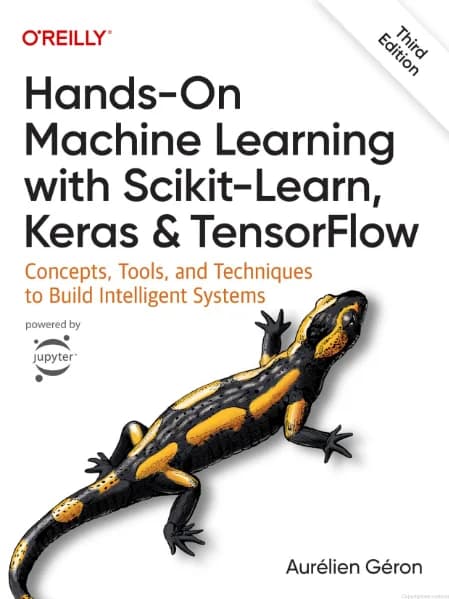
Hands-On Machine Learning

Author(s):Aurelien Geron (2022)
Best Level:Practicing ML with Python
Format:Paperback, eBook
Reddit Verdict:Default r/MachineLearning pick
Check price on Amazon

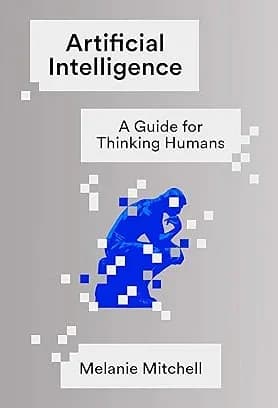
A Guide for Thinking Humans

Author(s):Melanie Mitchell (2019)
Best Level:Students and skeptics
Format:Paperback, eBook, Audiobook
Reddit Verdict:Most assigned in CS courses
Check price on Amazon

Best AI Books in 2026: In-Depth Reviews

1
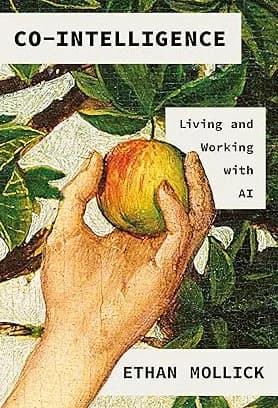
Co-Intelligence: Living and Working with AI
Best Overall

Co-Intelligence: Living and Working with AI

4.6

Ethan Mollick teaches AI and entrepreneurship at Wharton, and Co-Intelligence is the book r/artificial and r/ChatGPT point to most often when someone asks where to start. His argument is that AI works best as a co-worker you experiment with, not a tool you wait to be told how to use. The book lays out four rules for working with AI (always invite it to the table, be the human in the loop, treat it like a person while remembering it isn't one, and assume this is the worst AI you'll ever use) and backs each one with classroom experiments testing GPT-4 against MBA students.

Key Features:

  • Four practical rules for working with AI, each backed by a real classroom experiment
  • Written for a general audience, no coding or technical background required
  • Covers both the productivity upside and the real risks of over-relying on AI
  • Short chapters, most under 15 pages, built for reading in small sessions

Pricing:

Check current price on Amazon

Pros:

  • + Most frequently recommended AI book on Reddit's general AI subreddits in 2025-2026
  • + Mollick keeps publishing free essays on his One Useful Thing newsletter, so the ideas keep getting updated
  • + Works for a curious individual, a manager, or a classroom without modification

Cons:

  • - Light on technical depth, readers who want to understand how transformers work need a second book
  • - A few examples reference GPT-4-era tools that have since been replaced

Best For:

Anyone who wants one book that explains how to actually work with AI day to day, written by someone who tested these ideas in a live classroom.
Check price on Amazon →
2
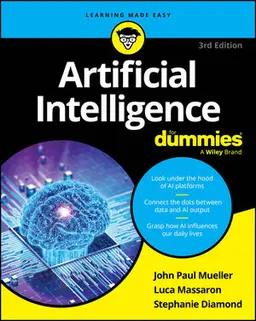
AI For Dummies, 3rd Edition
Best for Beginners

AI For Dummies, 3rd Edition

4.4

John Paul Mueller and Luca Massaron's For Dummies AI title is now in its 3rd edition, updated to cover generative AI, large language models, and the wave of tools that arrived after ChatGPT launched. It follows the standard For Dummies format: short, self-contained chapters that define a term before using it, with sidebars covering the history of AI, how neural networks work at a conceptual level, and where AI already shows up in everyday apps. It's the book Reddit recommends when someone says they don't even know what a prompt is.

Key Features:

  • Covers generative AI, machine learning, robotics, and AI ethics in separate chapters
  • Glossary-style structure: each chapter defines terms before building on them
  • Includes practical sections on using AI tools like ChatGPT for everyday tasks
  • No prior coding, statistics, or math background assumed

Pricing:

Check current price on Amazon

Pros:

  • + Easiest entry point for someone who finds Co-Intelligence still too abstract
  • + Updated for the generative AI era, unlike older AI For Dummies editions still in circulation
  • + Works well as a reference to flip back to, not just a cover-to-cover read

Cons:

  • - Some sections feel padded compared to more focused beginner books
  • - Readers already comfortable with ChatGPT and basic AI terms will find the first third too slow

Best For:

Readers who want every AI term explained from zero, with no assumptions about prior tech knowledge.

Check price on Amazon →
3
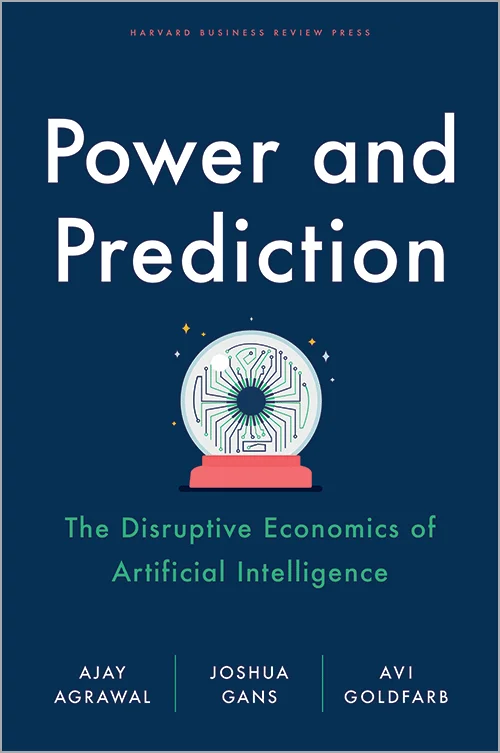
Power and Prediction: The Disruptive Economics of Artificial Intelligence
Best for Business and Leaders

Power and Prediction: The Disruptive Economics of Artificial Intelligence

4.4

Economists Ajay Agrawal, Joshua Gans, and Avi Goldfarb wrote Prediction Machines in 2018 and followed it up with Power and Prediction in 2022, and the second book is the one Reddit's business and leadership threads now point to. The core idea: AI doesn't just make existing processes faster, it changes which decisions are worth making at all, which shifts power between companies, regulators, and workers. The authors use historical analogies, particularly the slow adoption of electricity, to argue that the biggest AI-driven business changes haven't happened yet because they require rebuilding systems, not just adding AI to old ones.

Key Features:

  • Frames AI adoption through the lens of "point solutions" vs full system redesign
  • Uses the electrification of factories as a historical parallel for AI adoption timelines
  • Written by three economists, with citations to peer-reviewed research throughout
  • Includes a framework for identifying where AI will shift power within an industry

Pricing:

Check current price on Amazon

Pros:

  • + Most cited 2025-2026 pick for AI business strategy across LinkedIn and business-focused Reddit threads
  • + Strong on the "why" of AI strategy, useful for executives deciding where to invest
  • + Holds up better over time than books built around specific tools or product names

Cons:

  • - Denser and more academic than Co-Intelligence, less of a quick read
  • - Light on hands-on guidance, this is a strategy book, not a how-to

Best For:

Executives and managers who need to understand how AI changes competitive dynamics, not just how to use a chatbot.

Check price on Amazon →
4
Hands-On Machine Learning with Scikit-Learn, Keras, and TensorFlow, 3rd Edition
Best for Machine Learning

Hands-On Machine Learning with Scikit-Learn, Keras, and TensorFlow, 3rd Edition

4.7

Aurelien Geron's Hands-On Machine Learning is the book r/MachineLearning and r/learnmachinelearning recommend more than any other for people who want to build models, not just read about them. The 3rd edition, published in 2022, rewrote the deep learning chapters around TensorFlow 2 and added coverage of transformers and attention mechanisms. Each chapter pairs theory with runnable Python code in Jupyter notebooks, covering everything from linear regression through convolutional neural networks to natural language processing with Hugging Face's transformers library.

Key Features:

  • Every chapter includes working Python code using Scikit-Learn, Keras, and TensorFlow
  • 3rd edition adds dedicated chapters on transformers, attention, and Hugging Face
  • Exercises at the end of each chapter with solutions available online
  • Covers the full pipeline: data prep, model selection, training, tuning, and deployment

Pricing:

Check current price on Amazon

Pros:

  • + The default recommendation on r/learnmachinelearning for anyone past the absolute-beginner stage
  • + Code-first approach means readers build a portfolio of working notebooks while learning
  • + 3rd edition is current enough to cover the transformer architecture behind modern LLMs

Cons:

  • - Assumes comfort with Python, readers brand new to programming should start elsewhere first
  • - At roughly 800 pages, it's a multi-month read, not a weekend skim

Best For:

Readers who already know basic Python and want a single book that takes them from "what is a model" to building transformer-based systems.

Check price on Amazon →
5
Artificial Intelligence: A Guide for Thinking Humans
Best for Students

Artificial Intelligence: A Guide for Thinking Humans

4.5

Melanie Mitchell is a complexity scientist at the Santa Fe Institute, and her 2019 book remains one of the most recommended titles on r/MachineLearning and college reading lists for explaining how AI systems actually work, and where they fall short. Rather than hype or doom, Mitchell walks through the history of AI from symbolic logic to deep learning, explaining concepts like convolutional networks and reinforcement learning in plain language while pointing out the gap between how AI performs on benchmarks and how it handles the messiness of the real world.

Key Features:

  • Traces AI history from 1950s symbolic AI through deep learning, with no math required
  • Explains convolutional networks, reinforcement learning, and embeddings conceptually
  • Includes a chapter specifically on "common sense" and why it remains hard for AI
  • Frequently assigned in introductory college AI and CS courses

Pricing:

Check current price on Amazon

Pros:

  • + Strikes a rare balance: technically accurate but readable without a CS degree
  • + Holds up well years after publication because it focuses on concepts, not specific products
  • + Mitchell's background in cognitive science gives the skepticism chapters real weight

Cons:

  • - Published in 2019, so it predates ChatGPT and the generative AI boom by several years
  • - Some later chapters assume patience with longer philosophical discussions

Best For:

Students and curious skeptics who want to understand how AI actually works under the hood, including its real limitations.

Check price on Amazon →
6
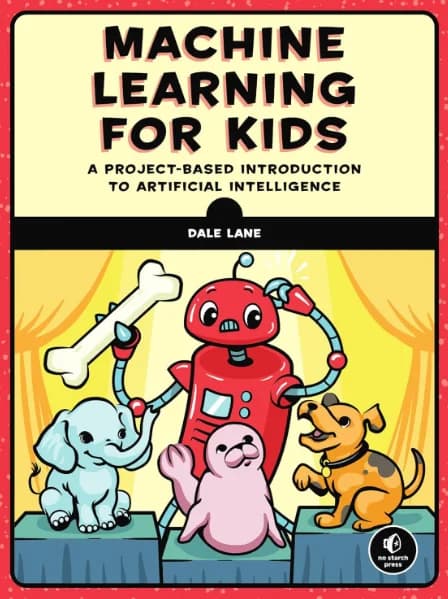
AI and Machine Learning for Kids
Best for Kids

AI and Machine Learning for Kids

4.5

Dale Lane, a developer who helped build IBM's Machine Learning for Kids platform, wrote this 2021 book to pair with that free tool. It walks readers age 10 and up through hands-on projects: training a model to recognize images, building a chatbot, and creating simple games that respond to voice or text, using block-based coding (Scratch) so no prior programming experience is needed. Parents on r/artificial and r/educationalAI consistently point to this as the rare kids' AI book that has children actually building something, not just reading about robots.

Key Features:

  • Pairs with the free Machine Learning for Kids web platform (machinelearningforkids.co.uk)
  • Uses Scratch block-based coding, no typing or syntax required
  • Projects include image recognition, chatbots, and simple games
  • Written for ages 10 and up, usable with adult guidance for younger kids

Pricing:

Check current price on Amazon

Pros:

  • + Hands-on projects keep kids engaged longer than explanation-only AI books for children
  • + The companion platform is free, so there is no extra software cost
  • + Gives kids a real (if simplified) mental model of how training data shapes a model

Cons:

  • - Requires a computer with internet access, not a pure offline reading experience
  • - Younger kids (under 10) will need an adult alongside them for setup

Best For:

Parents and teachers who want kids to build small AI projects themselves, not just read about AI.

Check price on Amazon →

How We Picked These Books

Most "best AI books" lists online recycle the same five titles regardless of who is reading. We started instead from what people actually ask for: threads on r/artificial, r/MachineLearning (2.9M+ members), r/datascience, r/books, and r/singularity asking for AI books "for beginners," "for business," "for my kid," and so on.

A few patterns showed up across nearly every thread we read:

  • People asking for AI books almost always specify their starting point (technical vs non-technical) and what they want to do with the information, so a single "best AI book" answer rarely fits everyone
  • Books published before 2023 get flagged as "still good for concepts, outdated on tools," which is why we separated concept books (Mitchell, Goodfellow) from tool-specific guidance (Mollick, AI For Dummies)
  • Free and PDF options come up constantly, especially from students and career-changers on a budget, which is why we built a dedicated section for them below
  • The same handful of books (Co-Intelligence, Hands-On Machine Learning, AI: A Guide for Thinking Humans) appear across multiple categories because they genuinely serve more than one audience

If you're also exploring how to learn AI more broadly, our guide on how to learn AI according to Reddit covers free courses and communities that pair well with any of the books below.

Best AI Books for Beginners

For total beginners, the question isn't which book is "best" in the abstract, it's which book matches how much you already know.

If you've used ChatGPT a few times and want to understand how to get more out of AI tools in general, start with Co-Intelligence. Ethan Mollick assumes you've at least opened a chatbot before, then builds from there into how to actually collaborate with one. You can read more about Mollick's ongoing experiments on his One Useful Thing newsletter, which he updates roughly weekly.

If terms like "large language model," "training data," or "neural network" still feel fuzzy, AI For Dummies, 3rd Edition is the better starting point. It defines every term before using it, which Co-Intelligence doesn't always do.

Both books show up constantly in Reddit threads where someone says "I'm not techy, where do I start," and the consensus is to pick based on whether you've already used AI tools (start with Mollick) or haven't really (start with the Dummies guide).

Best AI Books for Business

Business readers tend to want one of two things: either "how do I personally use AI better at work" or "how should my company think about AI strategically." Those are different books.

For the first question, Co-Intelligence is the most cited answer, since Mollick's research is specifically about how knowledge workers use AI day to day, including studies on consultants and students completing real tasks with and without AI assistance.

For the second question, Power and Prediction is the title that comes up when the conversation shifts to "what does this mean for our industry." The authors, all economists, previously wrote 2018's Prediction Machines, and Power and Prediction is widely considered the more current follow-up for 2025-2026 strategy discussions.

A useful pattern from these threads: read Co-Intelligence first if you're an individual contributor or manager, and add Power and Prediction if your role involves decisions about where the company invests in AI. If you're looking for tool recommendations rather than books, our ChatGPT for business guide covers what to actually use day to day.

Best AI Books for Leaders

Leadership-focused threads overlap heavily with the business category above, but with one additional title that comes up specifically when the audience is executives and boards: Competing in the Age of AI by Marco Iansiti and Karim R. Lakhani.

Published in 2020 by two Harvard Business School professors, it argues that AI-driven companies operate on a fundamentally different operating model, one built around software and data rather than traditional product lines, and that most established companies are organized in ways that actively resist this shift. It's older than Power and Prediction, but Reddit's leadership-focused threads still cite it for its case studies on how companies restructured around AI-driven decision-making.

Pairing recommendation that shows up often: read Power and Prediction for the "why now" argument and Competing in the Age of AI for the "how to restructure" argument. Together they cover both the economics and the organizational design questions that come up in leadership AI discussions.

Free AI Books and PDFs for Beginners

Two titles come up repeatedly whenever someone asks for a free AI book, and both are legitimately free, not pirated copies of paid books.

Machine Learning for Humans by Vishal Maini and Samer Sabri started as a free series of posts and remains available as a free PDF and Medium series. It's short, roughly 100 pages, and walks through supervised learning, unsupervised learning, and neural networks using plain-language analogies rather than equations. It's the most commonly linked free resource on r/learnmachinelearning for people who want a concept overview before committing money to a textbook.

For readers heading toward data science specifically, An Introduction to Statistical Learning by James, Witten, Hastie, and Tibshirani is available as a free PDF directly from the authors at statlearning.com, with a paid hardcover version available too for readers who prefer physical books. It's one of the most-assigned statistics and machine learning textbooks in university courses, and the free PDF is the official version, not a scanned copy.

Both pair well with our guide to learning AI on Reddit, which covers free courses that complement these texts, and our guide to AI tools for research if you want help digesting papers and long PDFs alongside a book.

Best AI Books for Machine Learning

For machine learning specifically, as opposed to AI concepts in general, Hands-On Machine Learning with Scikit-Learn, Keras, and TensorFlow is the book that comes up first in nearly every r/MachineLearning and r/learnmachinelearning thread asking for a single recommendation. The 3rd edition's added chapters on transformers and Hugging Face make it current enough to bridge into how today's LLMs work, not just classic ML.

For readers who want the math underneath the libraries, Deep Learning by Ian Goodfellow, Yoshua Bengio, and Aaron Courville is the reference text most often described as "the textbook" for deep learning theory. Published by MIT Press in 2016, it's also available as a free read-online version at deeplearningbook.org, though many readers buy the print version once they've confirmed it's the right level for them.

The common sequencing advice: read Hands-On Machine Learning first for practical grounding, then use Deep Learning as a reference when you hit a concept the first book glosses over.

Best AI Books for Data Science

Data science threads split between "I need to learn the fundamentals" and "I already know ML basics, how do I build production systems."

For fundamentals, An Introduction to Statistical Learning (also listed above as a free PDF) remains the most-assigned starting text, covering regression, classification, resampling methods, and tree-based models with R and Python code examples.

For the production side, Designing Machine Learning Systems by Chip Huyen is the 2022 book that consistently comes up when r/datascience members ask how to go from "I can train a model in a notebook" to "I can ship a model that serves real traffic." Huyen, who has worked at NVIDIA and taught ML systems design at Stanford, covers data pipelines, feature stores, monitoring, and the operational problems that textbooks focused on model accuracy tend to skip. You can find more of her writing on her personal site.

If your interest in data science is connected to coursework, our guide for AI tools for computer science students covers software that pairs well with both books.

Best AI Books for Students

For high school and college students, the recommendations lean toward books that build conceptual understanding without requiring a textbook-level time commitment.

AI: A Guide for Thinking Humans shows up on introductory AI and CS course reading lists because Melanie Mitchell explains how systems like image classifiers and game-playing AI actually work, then spends real time on what they get wrong, which gives students a more accurate mental model than headline-driven coverage of AI.

Hello World: Being Human in the Age of Algorithms by Hannah Fry is the other frequently recommended student pick, focused less on how AI works internally and more on where algorithms already make decisions about people, in courts, hospitals, and hiring. Fry is a mathematician at University College London, and the book is built around real case studies rather than abstract discussion.

Students researching specific AI tools for coursework rather than background reading should also check our ChatGPT for students guide, which is more tool-focused than book-focused.

Best AI Books for Kids

Most AI books written for adults assume a reading level and patience that doesn't translate to kids, which is why AI and Machine Learning for Kids by Dale Lane stands out in parenting and education threads on r/artificial and r/educationalAI.

The book pairs with the free Machine Learning for Kids platform (machinelearningforkids.co.uk), so children age 10 and up don't just read about AI, they train simple image classifiers, build chatbots, and create small games using Scratch's block-based coding. No prior programming experience is needed, though younger kids will want an adult alongside them for setup.

Parents looking for screen-time guidance around AI tools more broadly may also find our learning AI guide useful as a starting reference, even though it's written for an adult audience.

Best AI Books for Dummies (and How They Differ From 'Beginner' Books)

"For dummies" and "for beginners" sound interchangeable, but Reddit threads treat them slightly differently. "Beginner" books (like Co-Intelligence) often assume you've used an AI tool before and want to use it better. "For dummies" books assume you might not have, and define every term from the ground up.

AI For Dummies, 3rd Edition is the clearest match for this category, structured as a reference you can jump into at any chapter without having read the previous ones, with sidebars covering the history of AI alongside generative AI tools that arrived after ChatGPT.

If you finish it and want more depth, both the Beginners section and the Machine Learning section above have logical next steps depending on whether you want to use AI better or build with it.

AI Books Reddit Says to Skip in 2026

Not every popular AI book holds up. A few patterns came up repeatedly in threads discussing which AI books feel outdated or overrated by 2026:

  • General-audience AI books published before the 2022-2023 generative AI wave tend to get the "good for history, outdated for tools" verdict, since they were written before ChatGPT, Claude, and similar tools existed in their current form
  • Books that focus heavily on predicting specific future scenarios (rather than explaining how current systems work) age the fastest, since the actual trajectory of AI development has repeatedly surprised even researchers
  • Several commenters note that books marketed as "the AI bible" or similar tend to oversell their own importance, and that no single book covers everything someone needs to know about AI
  • Technical books more than 2-3 editions old, especially anything still teaching TensorFlow 1.x workflows, get flagged as actively misleading for beginners trying to follow along with current code

The practical takeaway from these threads: pick books based on what they actually cover (concepts vs tools vs strategy vs hands-on code) rather than how broadly a book claims to cover "AI," and check the publication year against how fast the specific topic moves. Concept books like Mitchell's age slowly; tool-specific guidance ages fast.

How to Choose the Right AI Book for Your Goal

If you only read one paragraph of this guide, read this one.

Start with what you want to be able to do after reading, not which book has the best reviews. If your goal is "use AI tools better at work," Co-Intelligence gets you there fastest. If your goal is "understand what AI even is, from zero," AI For Dummies is built for exactly that. If your goal is "build models myself," Hands-On Machine Learning is the direct route, with Deep Learning as backup reference. If your goal is "make a decision about AI for my business or team," start with Power and Prediction.

One more thing that came up often enough to mention: several readers said they bought two or three AI books at once, started all of them, and finished none. The threads that describe people actually finishing a book and getting value from it almost always describe picking exactly one, finishing it, and then deciding whether a second book is actually needed based on what the first one left unanswered.

Frequently Asked Questions

AI For Dummies, 3rd Edition by John Paul Mueller and Luca Massaron is the most recommended starting point for someone with zero background, since it defines every term before using it. If you have already used ChatGPT or similar tools and want to use them better, Co-Intelligence by Ethan Mollick is the more commonly recommended next step.

Which AI Book Should You Read First in 2026?

For most readers, Co-Intelligence by Ethan Mollick is the best starting point: practical, written for a general audience, and backed by ongoing research from someone actively teaching this material. If you're starting from absolute zero and Co-Intelligence feels like it assumes too much, AI For Dummies, 3rd Edition is the better first book. From there, your next read should follow your goal: Power and Prediction for business strategy, Hands-On Machine Learning if you want to build models yourself, or AI: A Guide for Thinking Humans if you want a deeper conceptual grounding before anything else. Whichever you pick, the threads we read consistently favor finishing one book over starting several.

Check current prices for these books on Amazon using the links above, and explore our related guides for free AI courses and tools that pair well with any of these picks.

About the Author

Amara - AI Tools Expert

Amara

Amara is an AI tools expert who has tested over 1,800 AI tools since 2022. She specializes in helping businesses and individuals discover the right AI solutions for text generation, image creation, video production, and automation. Her reviews are based on hands-on testing and real-world use cases, ensuring honest and practical recommendations.

View full author bio

Related Guides