







Tool DiscoveryTool Discovery

Best AI Tools for Data Scientists in 2026: What Reddit Actually Uses

Updated: 2026-07-2010 min read

Reddit's r/datascience doesn't agree on much, but it agrees on this: most AI coding assistants sound better in a demo than they perform on a real dataset. One data scientist who tested every popular option against actual data science tasks, not toy examples, summed it up bluntly, none of the mainstream tools proved effective for real work, Google's Gemini included. What Reddit does trust is a smaller, more specific set of tools assigned to narrow jobs. ChatGPT for daily explanation and drafting. Cursor for the actual pipeline and production code, a tool multiple data scientists list among what they call indispensable. Claude, sometimes run through its Claude Code interface, for long documents and codebases a browser chat window can't hold in context.

Two other gaps rarely get discussed on Reddit by tool name, but come up constantly in how a data scientist actually spends their week. Turning findings into a slide deck nobody wants to build from scratch, where Gamma fits. And cutting meeting note-taking out of a week already short on hours, where Fireflies fits.

This guide breaks down what r/datascience and r/dataanalysis actually recommend, the one criticism that comes up again and again about general AI models and real data science work, the tools worth adding for the parts of the job Reddit talks about less, and a task-by-task pick for where each one actually earns its place.

Best AI Tools for Data Scientists in 2026, According to Reddit

Data scientist AI tools shown as a glowing dashboard connecting code, charts, and a neural network

Quick Pick: The Right AI Tool for Each Data Science Task

Data Analysis

Bad
Decent
Great
Julius AI logoJulius AITry Julius AI

Writing Code

Bad
Decent
GitHub Copilot logoGitHub CopilotTry GitHub Copilot
Great

Research

Bad
Google SearchTry Google Search
Decent
Great
Perplexity logoPerplexityTry Perplexity

Presenting Findings

Bad
PowerPointTry PowerPoint
Decent
Great

Meeting Notes

Bad
Manual NotesTry Manual Notes
Decent
Otter.ai logoOtter.aiTry Otter.ai
Great
Fireflies logoFirefliesTry Fireflies

📺 Watch the Complete Video Guide

Get a visual walkthrough of all the tools featured in this guide. Watch demos, see real examples, and learn how to implement these tools in your business.

Detailed Tool Reviews

1

ChatGPT

4.6

ChatGPT is the most frequently named AI tool across r/datascience and r/learndatascience threads about real workflows, used as a daily assistant for debugging, explaining unfamiliar statistics and ML concepts, and drafting analysis code before anything more specialized gets involved. One data scientist listed it among the seven tools they called indispensable in a widely shared post about their actual tool stack.

Key Features:

  • Named first in a widely shared r/learndatascience post listing seven AI tools a data scientist says they cannot work without
  • Used for explaining unfamiliar statistics, ML concepts, and library behavior in plain language
  • Drafts and debugs Python, R, and SQL before specialized tools get involved
  • Free tier available, Plus plan adds GPT-4 class models at $20/month

Pricing:

Free tier, Plus $20/month

Pros:

  • + Most-mentioned AI tool across every data science Reddit thread checked for this guide
  • + Works as one flexible starting point before reaching for a specialized IDE or research tool
  • + Free tier is usable for daily explanation and drafting work

Cons:

  • - A Reddit user who tested it directly against real data science tasks reported it generating logically wrong code for edge cases and statistical tests
  • - No built-in access to a live codebase, so context has to be pasted in manually unlike an IDE-integrated tool

Best For:

Data scientists who want one general assistant for explanation, drafting, and debugging before adding a specialized coding or research tool.

Try ChatGPT
2

Cursor

4.6

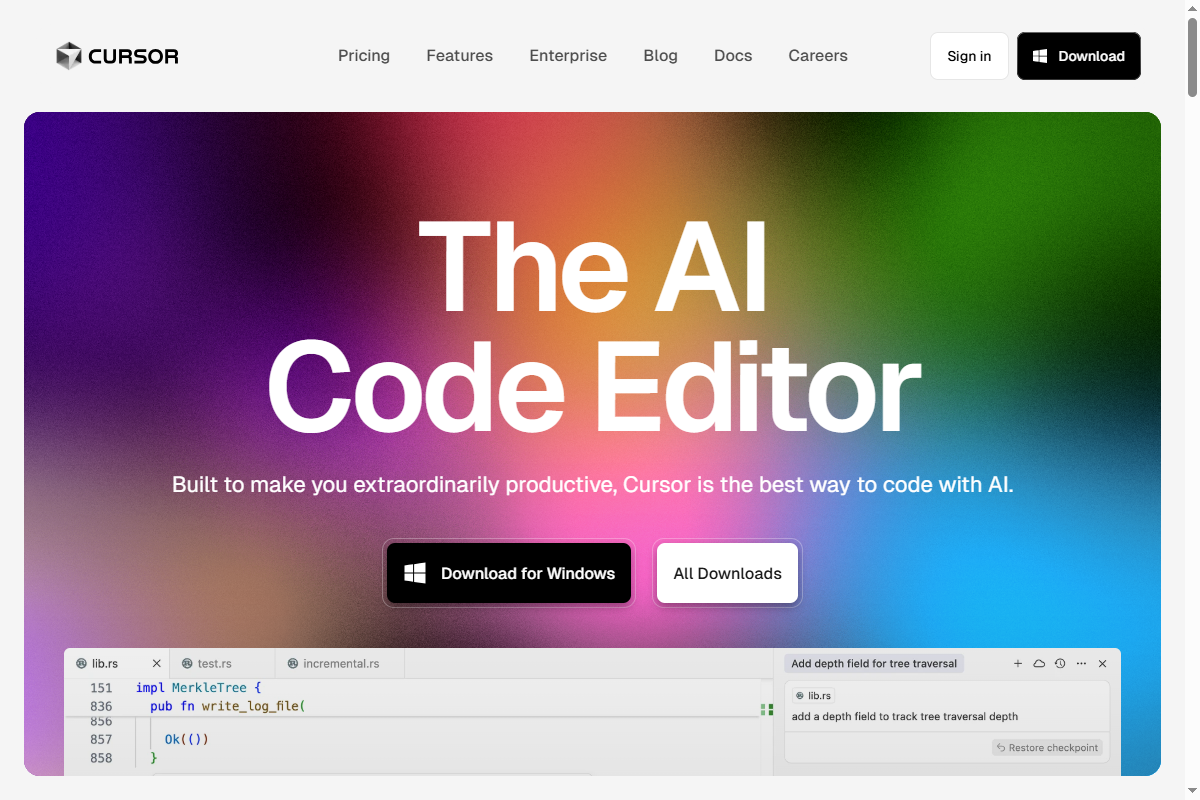
Cursor is the AI code editor data scientists on Reddit describe reaching for once work moves past a quick chatbot question, for local development, building pipelines, and production code. One user summed up their workflow directly: for local development while constructing pipelines or working in production, they use Cursor, specifically because it keeps the whole project in view instead of one pasted snippet at a time.

Key Features:

  • Named for pipeline and production development, not just quick code snippets, in r/dataanalysis threads
  • Understands the full open project, not just a single file, unlike a browser chat window
  • Listed among the tools one professional data scientist called indispensable in a widely shared r/learndatascience post
  • Free tier available with paid plans for higher usage and stronger models

Pricing:

Free plan available with paid upgrades

Pros:

  • + Reddit users draw a clear line between it and chat-only tools for handling real pipeline and production code
  • + Fits directly into an existing coding workflow instead of requiring copy-paste between a browser and an editor
  • + Praised across both data science and general programming subreddits, not a niche recommendation

Cons:

  • - Broader Reddit sentiment on AI coding assistants notes they remain less reliable for complex, domain-specific data science logic than for general software tasks
  • - Team licensing costs are a consideration Reddit threads mention when scaling beyond individual use

Best For:

Data scientists writing and maintaining real pipelines or production code who want AI assistance embedded directly in the editor.

Try Cursor
3

Gamma

4.5

Gamma doesn't show up by name in the data science threads reviewed for this guide the way Cursor or ChatGPT do, but the gap it fills, turning finished findings into a deck a stakeholder will actually sit through, is one of the most consistent complaints once conversations move past pure coding. It turns a metrics summary and a rough bullet list into a stakeholder-ready deck in minutes instead of an afternoon.

Key Features:

  • Generates a full slide deck directly from a bullet-point outline or a pasted summary of findings
  • Handles the layout and design work a data scientist would otherwise lose an afternoon rebuilding by hand
  • Free plan available before Premium plans start at $8/month
  • Fills the presenting-findings gap that Reddit discusses constantly as a pain point, without a single dominant named tool

Pricing:

Free plan available, Premium from $8/month

Pros:

  • + Removes slide-layout work entirely, the same afternoon-long task Reddit data scientists complain about most once analysis is done
  • + Free plan is usable, not just a trial, for occasional deck building
  • + Fits directly after the analysis tools covered above in a real end-to-end workflow

Cons:

  • - Not a tool Reddit data scientists name directly in the threads reviewed for this guide, so this recommendation rests on the underlying pain point rather than a specific quote
  • - Best suited to summarizing already-finished findings, not doing the analysis itself

Best For:

Data scientists who finish the analysis fine but lose real time turning it into a deck a stakeholder or client will actually look at.

Try Gamma

The AI Tools Data Scientists Actually Use, According to Reddit

ChatGPT is the single most-mentioned AI tool across r/datascience, r/dataanalysis, and r/learndatascience threads about real workflows, appearing in nearly every roundup of what data scientists actually use day to day. Cursor and Claude follow closely behind, both cited for handling real coding work rather than just answering questions.

ToolReddit contextPrimary DS usePricing
ChatGPTNamed first in multiple "tools I can't live without" threadsExplanation, drafting, debugging, documentationFree tier, Plus $20/mo
CursorCited for pipeline and production workAI-integrated coding for Python, SQL, ETLFree tier, paid upgrades
Claude / Claude CodeCited for long-context reasoning across large codebasesCode review, refactoring, long documentsFree tier, Pro $20/mo
GitHub CopilotCited for SQL verificationInline autocomplete, catching syntax errorsPaid, per user
Google Gemini (incl. Colab)Mixed reviews, one detailed test called it a weak performerNotebook-embedded coding helpFree tier, pay-per-token API

Counts here are directional, based on how often a tool gets independently named across the threads checked for this guide rather than a raw tally of every comment. r/datascience itself runs close to a million members, dwarfing smaller profession-specific subreddits, and that scale shows in how much tool-testing content it produces.

SubredditApprox. membersRelevance to data scientists
r/datascience900,000-1,000,000Primary hub for professional DS tool discussion and career questions
r/learndatascience400,000-500,000Beginners comparing AI tools while learning the field
r/MachineLearning2,000,000+Heavier ML engineering discussion, AutoML and experiment tracking tools
r/dataanalysis150,000-250,000Practical tooling questions, closer to analyst-level work

One data scientist's actual daily stack, shared in a r/learndatascience post listing the tools they call indispensable, looked like this:

"Here are seven AI tools that I find indispensable: Grammarly AI, You.com, Cursor, Deepnote, Claude Code, ChatGPT, llama.cpp." — r/learndatascience, from a post on an individual data scientist's daily tool stack (2026)

That list matters more than any single tool ranking. ChatGPT and Claude sit next to a local, offline model and a writing tool, not instead of them.

How Data Scientists Are Actually Using AI (and What They Prompt For)

Coding assistance, not full automation, is the most common AI use case across every data science thread checked for this guide. The pattern that keeps repeating: use AI for a first pass, a helper function, a regex, a rough plot, then verify it against the actual data before trusting it.

  • Drafting boilerplate Python, R, and SQL before refining it by hand
  • Asking a chatbot to explain unfamiliar statistical tests or library behavior in plain language
  • Generating exploratory plots and summary stats to review, not to report directly
  • Verifying SQL for syntax errors before running it against production data
  • Summarizing long technical papers or documentation instead of reading them in full

A data analyst describing their SQL workflow put it simply:

"Co-Pilot is quite useful for verifying SQL code for errors." — r/dataanalysis, on using GitHub Copilot for SQL review (2026)

For exploratory analysis, a workable prompt pattern that keeps showing up in these threads looks like this:

Given this dataset summary, paste column names, types, and a few summary statistics, suggest three exploratory questions worth investigating and the specific plot or test that would answer each one. Do not assume anything about the data that isn't in the summary.

The split matters because of what happens when that boundary gets ignored. One data scientist who tested the popular coding assistants specifically against real data science tasks, not toy examples, reported a clear verdict:

"None of the mainstream AI tools proved effective for data science." — r/datascience, from a post testing popular coding assistants against real data science work (2026)

The Risk Reddit Keeps Warning About: AI That Sounds Right and Is Wrong

The most repeated warning across these threads isn't about pricing. It's about how confidently a general AI model can hand back an answer that is fluent, plausible, and incorrect, especially once the task moves past a simple coding question into actual statistical or modeling judgment.

Task typeRisk levelExampleWhat happens if it's wrong
Boilerplate code, plot generationLowA slightly off variable name or plot styleCaught immediately when the code runs or the plot renders
Exploratory analysis, feature suggestionsMediumA misleading correlation flagged as meaningfulWastes analysis time before a human catches it in review
Statistical tests, model selectionHighWrong test for the data distribution, a hallucinated functionProduces a technically running but statistically invalid result
Production pipeline logicHighSilent edge-case failure in a data transformationBad data reaches a downstream model or report before anyone notices

One data scientist who tested the field's most popular AI coding tools against real work, not marketing demos, was specific about where they failed:

"While the demonstrations appear impressive, Google Gemini in Colab performed quite poorly." — r/datascience, from a post testing AI coding assistants on real data science tasks (2026)

That same thread's broader conclusion, that none of the mainstream tools proved effective for actual data science work, is a useful corrective to how these tools get marketed. The practical rule Reddit lands on isn't don't use AI for analysis. It's don't let AI's confidence substitute for checking the output against the data itself, especially once a number is going into a report or a model decision other people rely on.

Specialized Tools vs a General Assistant: Where Reddit Draws the Line

Reddit's actual pattern for AI tools in data science isn't picking a favorite. It's assigning tools by the specific stage of the job. Cursor handles the pipeline and production code. Claude handles long documents and multi-file reasoning. GitHub Copilot catches SQL syntax before it runs. Local, offline models like llama.cpp handle anything involving data that shouldn't leave the building.

  • Cursor: free tier with paid upgrades, cited for pipeline and production development rather than one-off snippets
  • Claude / Claude Code: free tier, Pro at $20/month, cited for long-context code review and document analysis
  • GitHub Copilot: paid per user, cited for catching SQL errors before execution
  • llama.cpp: free and open source beyond hardware cost, run locally for privacy-sensitive datasets that can't go to a cloud API

A data scientist explaining why they run models locally rather than through a cloud API made the privacy tradeoff explicit, choosing llama.cpp specifically to keep sensitive data off third-party servers while still getting AI-assisted analysis, a pattern that comes up repeatedly in threads from data scientists working with regulated or proprietary datasets.

The gap in these threads is what happens after the analysis is done. Reddit rarely names a specific tool for turning findings into a deck a stakeholder actually wants to look at, but the pain point behind that gap, the afternoon lost rebuilding the same slide layout, is one of the most consistent DS complaints once conversations move past pure coding. That's the specific gap Gamma is built for: turning a metrics summary and a rough bullet list into a stakeholder-ready deck without losing the rest of the afternoon to slide formatting. If Cursor is the one you're still deciding on, our Cursor Reddit guide covers what developers actually think of it in more detail.

Does AI Actually Save Data Scientists Time? Reddit's Verdict

The honest answer is yes for boilerplate code, explanation, and documentation, and much more cautiously for anything that feeds directly into a model decision or a report a stakeholder will act on. The threads behind this guide describe a role shift more than a role replacement: less time spent typing out routine functions, more time spent verifying what the AI produced actually holds up against the real data.

Signs a data scientist's AI workflow is working well, based on this research:

  • AI handles first-draft boilerplate, explanation, and documentation
  • A human still verifies statistical tests, model choices, and anything reaching a production pipeline
  • Task-specific tools replace a general chatbot for pipeline code, long documents, and sensitive data
  • Time saved on typing gets reinvested in checking results, not skipped entirely

Signs it's not working:

  • AI-generated code or analysis ships without anyone re-running it against the actual data
  • The same general chatbot gets used for a quick plot and a production pipeline with no distinction in review rigor
  • Subscription costs across ChatGPT, Cursor, and Claude pile up with no one tracking whether all three are actually earning their keep

The rule that shows up most consistently across these threads is a direct extension of the risk section above: treat AI output as a first draft from a fast but occasionally confidently wrong junior collaborator, not as a finished analysis. The tools that survive in a real data scientist's stack, per these threads, are the ones assigned to a specific, bounded task, not the ones asked to replace judgment.

Frequently Asked Questions

ChatGPT is named more often than any other single tool across r/datascience and r/learndatascience threads, used for explanation, drafting, and debugging. Cursor and Claude follow closely, both cited for real coding work such as pipelines and long-document analysis rather than quick chatbot answers.

Assign the Tool to the Task, Not the Whole Job to One Tool

Reddit's real answer to what's the best AI tool for a data scientist isn't a single name. ChatGPT covers daily explanation and drafting. Cursor covers real pipeline and production code. Claude covers long documents and codebases too big for a standard chat window. The one warning that shows up in nearly every thread behind this guide: a fluent AI answer is not the same as a correct one, and the more a result feeds into a model decision or a stakeholder report, the more it needs a human checking it against the actual data. Start with whichever part of your week is eating the most time, boilerplate code, meeting notes, or building the same slide deck from scratch, and add one tool for that specific gap instead of trying to replace your whole stack at once.

See more Reddit-tested AI workflows and pricing breakdowns in our full guides library, or start turning your findings into a deck in minutes with Gamma.

About the Author

Amara - AI Tools Expert

Amara

Amara is an AI tools expert who has tested over 1,800 AI tools since 2022. She specializes in helping businesses and individuals discover the right AI solutions for text generation, image creation, video production, and automation. Her reviews are based on hands-on testing and real-world use cases, ensuring honest and practical recommendations.

View full author bio

Related Guides