
CoreWeave Review: GPU Cloud Pricing, Performance, and Who It Suits

Key Numbers
Key Takeaways
- 1CoreWeave is a GPU-only cloud provider founded in 2017 and listed on NASDAQ in March 2025. It rents NVIDIA H100, A100, and H200 GPUs at $2.21-6.31/hr per GPU, and runs dedicated clusters for AI labs including OpenAI, Meta, and Mistral.
- 2H100 PCIe costs $4.25/hr on CoreWeave versus $6.88/hr at AWS and $12.29/hr at Azure (Q1 2026). For a 64-GPU cluster running 90 days, CoreWeave saves roughly $168,000 compared to AWS on-demand rates for the same hardware.
- 3CoreWeave holds a $30.1B revenue backlog as of June 2025, implying roughly six years of contracted revenue at 2025 run rates. That backlog length signals that customers are committing to long-term dedicated GPU infrastructure, not running short experiments.
CoreWeave rents NVIDIA GPUs at prices that undercut AWS and Azure by 35-80%, depending on the GPU and workload type. The company is not trying to replace general-purpose cloud providers. It offers one thing: high-density GPU clusters, optimized for AI training and inference, with Kubernetes-native tooling built for large language model workloads.
The fact that OpenAI signed an $11.9B, five-year compute deal with CoreWeave in 2023 reveals something important. OpenAI already has a deep arrangement with Microsoft Azure. That it needed CoreWeave too signals that general-purpose cloud cannot provision specialized GPU infrastructure at the speed and density that frontier AI labs require.
After reading this article, you will understand how CoreWeave pricing compares to AWS, Azure, Lambda Labs, and RunPod across the main GPU types, what kinds of teams CoreWeave is designed for and who it is not a good fit for, and what the company's IPO valuation and backlog data reveal about where GPU cloud is heading.
In This Article
- 1What CoreWeave Is and How It Started
- 2CoreWeave GPU Pricing vs AWS, Azure, and Lambda Labs (Q1 2026)
- 3How CoreWeave Works: Clusters, InfiniBand, and Mission Control
- 4CoreWeave Scale, IPO, and Financial Position
- 5Who CoreWeave Is Built For (and Who Should Look Elsewhere)
- 6CoreWeave Risks and Known Limitations
- 7CoreWeave vs Competitors: When to Use Each Provider
What CoreWeave Is and How It Started
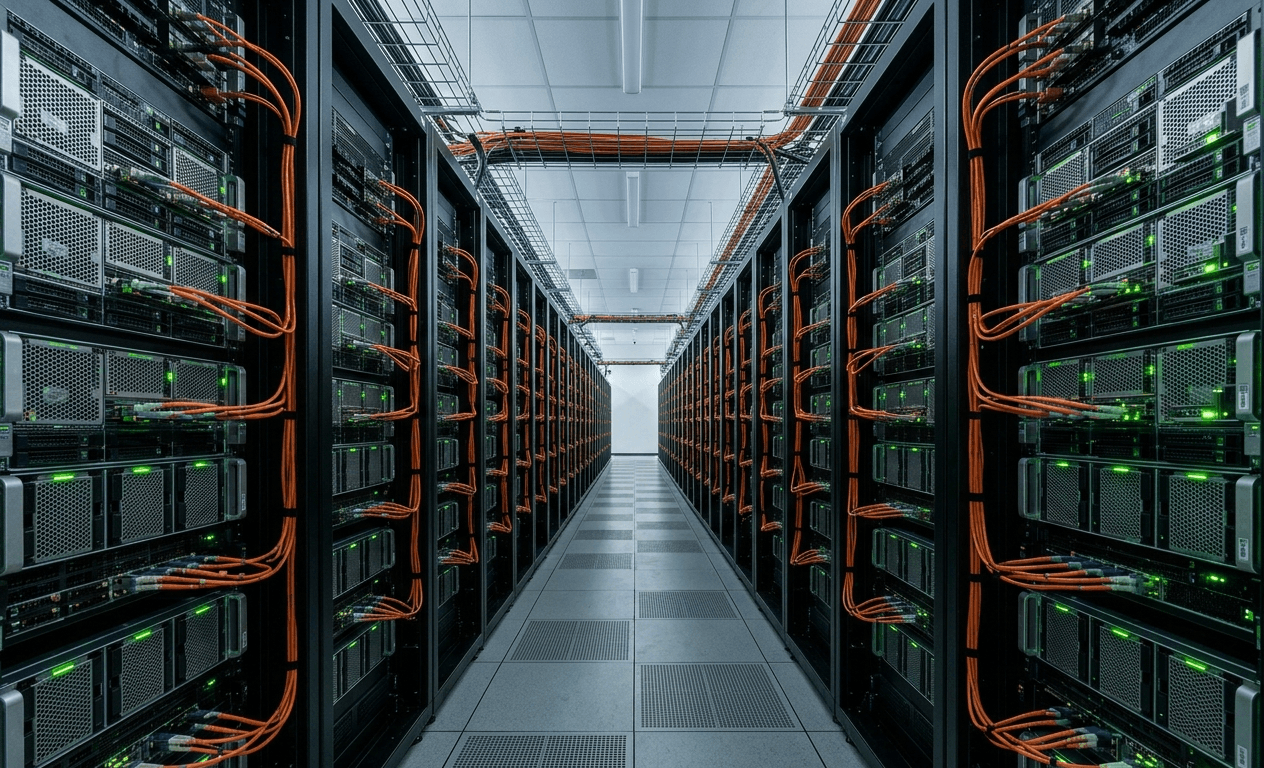
CoreWeave is a cloud infrastructure company that rents GPU compute exclusively for AI training and inference. It does not offer general-purpose virtual machines, managed databases, or CDN services. Every server in CoreWeave's fleet is a GPU server, and the company's entire operational model is built around that constraint.
The founding story is unusual. CoreWeave started in 2017 as Atlantic Crypto, a cryptocurrency mining operation run by three commodities traders. When the crypto bear market arrived in 2019 and mining became unprofitable, the company pivoted. It already owned large numbers of NVIDIA GPUs and understood how to operate them at scale in data centers. That experience translated directly into GPU cloud infrastructure.
NVIDIA owns approximately 6% of CoreWeave, acquired through early GPU supply arrangements. When NVIDIA released H100s in 2022 and H200s in 2024, CoreWeave was among the first cloud providers to offer them. For AI labs working on frontier models, time-to-hardware matters as much as price per GPU-hour.
Three things separate CoreWeave from every other cloud provider:
- Infrastructure scope: GPU-only. No object storage, no managed Kubernetes, no NoSQL databases. You bring your own or bolt on external services.
- Architecture: Kubernetes-native with CoreWeave's proprietary Mission Control software for managing GPU-intensive workloads across large clusters.
- Interconnect: Bare-metal access to InfiniBand-connected GPU clusters. For distributed training across hundreds of GPUs, InfiniBand provides the low-latency, high-bandwidth fabric that distributed training requires.
The specialization is the product. A general-purpose cloud provider builds infrastructure that serves thousands of different workload types. CoreWeave builds infrastructure that serves one.
CoreWeave GPU Pricing vs AWS, Azure, and Lambda Labs (Q1 2026)
CoreWeave's H100 PCIe starts at $4.25 per GPU per hour on-demand as of Q1 2026. The HGX variant (8-way NVLink/NVSwitch nodes, required for large training runs) costs $6.15-6.16 per GPU per hour. H200 in 8-way configuration runs $6.31 per GPU per hour.
The table below shows on-demand pricing across the major providers for comparable hardware.
| Provider | H100 PCIe (per GPU/hr) | H100 HGX/SXM (per GPU/hr) | A100 80GB (per GPU/hr) | Notes |
|---|---|---|---|---|
| CoreWeave | $4.25 | $6.15-6.16 | $2.21 | On-demand, Q1 2026 |
| AWS | $6.88 | $6.88 | $3.43 | p5 series, on-demand |
| Azure | $5.50-12.29 | $12.29 | — | ND H100 v5, on-demand |
| Lambda Labs | $2.99-3.44 | $3.44 | $1.99 | On-demand and reserved |
| RunPod (Secure) | $2.69 | $2.49 | $1.90 | Secure Cloud tier |
Sources: CoreWeave pricing page Q1 2026; Spheron Network GPU pricing comparison 2026; AWS p5 and p4de instance pricing.
Two things this table does not show are worth noting. First, CoreWeave's pricing is lowest among enterprise-grade providers for full-node HGX clusters. Lambda Labs and RunPod offer lower per-GPU rates, but their cluster scale is smaller and their enterprise SLAs are less robust. Second, AWS Reserved Instances with a 1-year commitment reduce H100 costs to roughly $4.10-4.50/hr, which narrows the CoreWeave gap for teams already embedded in AWS infrastructure.
"Migrating to CoreWeave gave us 3x faster request serving and cut our cloud costs by 75%." (Mistral AI, CoreWeave case study, 2024)
CoreWeave also prices its A100 PCIe instances at $2.21/hr, competitive with Lambda Labs ($1.99/hr) and well below AWS's A100 equivalent at $3.43/hr. For teams running inference on A100 hardware rather than training on H100, CoreWeave's pricing is among the most competitive in the enterprise segment.
For a broader breakdown of all six major GPU cloud providers including Spheron and Google Cloud, see our full GPU cloud provider comparison.
How CoreWeave Works: Clusters, InfiniBand, and Mission Control
CoreWeave's infrastructure is built around Kubernetes from the ground up, not retrofitted onto existing cloud architecture. Each GPU cluster consists of bare-metal nodes connected via NVIDIA InfiniBand networking, which provides 400 Gb/s or 800 Gb/s interconnect bandwidth between GPUs. That bandwidth matters for distributed training: when a training job spans hundreds of GPUs, the speed at which those GPUs exchange gradient updates determines how efficiently the cluster scales.
The three core technical layers are:
- GPU nodes: Bare-metal servers with NVIDIA H100, A100, or H200 GPUs. HGX configurations use NVLink and NVSwitch to connect 8 GPUs within a node at 600 GB/s total bandwidth. For training runs requiring more than 8 GPUs, nodes connect via InfiniBand.
- Networking: NVIDIA InfiniBand HDR (400 Gb/s) or NDR (800 Gb/s) fabric for inter-node GPU communication. This is the same fabric used in NVIDIA's DGX SuperPOD reference architecture.
- Mission Control: CoreWeave's proprietary Kubernetes operator for GPU workloads. It handles scheduling, preemption, checkpoint management, and resource quotas across large multi-tenant and single-tenant clusters.
What this means in practice: a team that wants to run a training job across 512 H100s submits a Kubernetes job manifest. Mission Control schedules the job onto available nodes, manages InfiniBand topology awareness so that GPUs communicating frequently are placed on the same switch fabric, and handles failure recovery.
The alternative at AWS uses p5 instances (H100 SXM) connected via Elastic Fabric Adapter at 3,200 Gb/s total bandwidth per node. AWS EFA is performant for distributed training, but it operates within the broader AWS ecosystem where jobs are submitted via SageMaker or EC2, not native Kubernetes operators.
CoreWeave's architecture is closer to how AI labs run on-premises infrastructure, which is one reason companies like OpenAI and Meta use it alongside their own hardware rather than as a pure replacement.
CoreWeave Scale, IPO, and Financial Position
CoreWeave went public on NASDAQ on March 28, 2025, priced at $40 per share with a market capitalization of approximately $35B. NVIDIA holds around 6% of the company, a stake acquired as part of the early GPU supply arrangements that gave CoreWeave preferential access to hardware at scale. According to NVIDIA Investor Relations, the equity stake reflects NVIDIA's strategic interest in the growth of GPU cloud infrastructure beyond its own DGX products.
Revenue growth has been steep. CoreWeave reported $5B in annual revenue for 2025, representing roughly 420% year-over-year growth (CoreWeave investor relations, 2026). As of June 2025, the company held a $30.1B revenue backlog, meaning contracts signed but not yet fulfilled.
The company's key customer relationships include:
| Customer | Deal Size | Details |
|---|---|---|
| OpenAI | $11.9B | Five-year compute contract signed 2023 |
| Meta | Undisclosed | Large-scale LLM training clusters |
| Mistral AI | Undisclosed | Inference serving with 3x speed improvement |
| NVIDIA | Strategic partner | ~6% equity stake, GPU supply priority |
Sources: CoreWeave press release 2023; CoreWeave investor relations 2025-2026.
"CoreWeave has built the most important new cloud infrastructure company in a decade." (Jensen Huang, NVIDIA CEO, 2024)
The Number Most Guides Don't Show
CoreWeave's $30.1B backlog as of June 2025, divided by its $5B annual revenue rate, implies approximately six years of contracted revenue already on the books. That is an unusually long commitment horizon for a cloud company. Most cloud contracts run one to three years. A six-year implied backlog suggests CoreWeave's largest customers are treating it as dedicated infrastructure, equivalent to owning hardware but without the capital expenditure.
The implication for pricing: CoreWeave can afford to price aggressively against hyperscalers because its revenue is largely locked in under long-term agreements. AWS and Azure, by contrast, carry more short-term contract exposure and maintain higher margins to offset churn risk.
For background on how hyperscalers like AWS, Azure, and Google Cloud structure their GPU infrastructure differently, see our hyperscalers explained guide.
Who CoreWeave Is Built For (and Who Should Look Elsewhere)
CoreWeave is the right choice for AI labs, research teams, and enterprises that need dedicated GPU capacity at scale for AI training or high-throughput inference. It is not designed for teams prototyping on single GPUs, running occasional experiments, or needing integrated cloud services alongside GPU compute.
The best-fit profiles for CoreWeave:
- AI labs running large training runs: teams training models with hundreds of GPUs continuously for weeks or months. CoreWeave's InfiniBand clusters and Mission Control scheduling are built for this workload.
- Enterprises with predictable, high-volume inference: serving large language models at scale requires consistent GPU access. CoreWeave's enterprise SLAs and dedicated cluster options suit this better than RunPod Community Cloud or spot instances.
- Teams migrating off AWS or Azure to reduce GPU costs: the gap between $6.88/hr (AWS H100) and $4.25/hr (CoreWeave H100) is material at scale. A team running 32 H100s continuously for a year saves approximately $734,000 by switching from AWS on-demand to CoreWeave.
- Companies needing rapid GPU scale-up: CoreWeave can provision large H100 and H200 clusters quickly due to its NVIDIA supply relationship. Hyperscalers frequently have wait lists for large allocations.
CoreWeave is not a good fit for:
- Teams with GPU budgets under $5,000/month: the platform is optimized for enterprise workloads. RunPod and Lambda Labs are better for smaller budgets.
- Teams that need integrated storage, databases, and networking in a single provider: CoreWeave offers storage products but nothing approaching the AWS or Azure service ecosystem.
- Teams needing a simple managed experience: CoreWeave assumes Kubernetes proficiency. AWS SageMaker and Google Vertex AI offer more managed training and serving pipelines for teams without ML infrastructure expertise.
CoreWeave Risks and Known Limitations
CoreWeave's pricing model uses an à la carte structure where GPU, CPU, RAM, and storage are billed separately. A single A100 GPU at $2.21/hr does not include the CPU and RAM needed to run the instance. Adding the accompanying compute resources can raise the effective cost to $3-4/hr, which is higher than the per-GPU headline rate suggests. Teams evaluating CoreWeave should request all-in pricing estimates, not just the GPU rate.
Customer dependency is a known risk from CoreWeave's own public disclosures. OpenAI accounted for a substantial portion of CoreWeave's 2024 revenue under its $11.9B contract. Any shift in OpenAI's infrastructure strategy would have a material effect on CoreWeave's financials. This is noted as a risk factor in CoreWeave's S-1 filing with the SEC.
Three limitations to evaluate before committing:
1. No integrated services: teams need external solutions for object storage, model registries, monitoring, and data pipelines. The lack of native integrations adds engineering overhead for teams migrating from AWS.
2. Enterprise contract requirements: some CoreWeave capacity requires committed use agreements, not fully on-demand access. Teams that need burst-and-release flexibility at short notice may find the contract terms less accommodating than AWS on-demand pricing.
3. Geographic coverage: CoreWeave operates data centers in the US and Europe. Teams serving inference traffic in Asia-Pacific do not have a CoreWeave region available as of Q1 2026.
CoreWeave vs Competitors: When to Use Each Provider
The GPU cloud market splits into three tiers with different trade-offs.
| Provider | Best For | H100 Price | Service Depth | Enterprise SLA |
|---|---|---|---|---|
| CoreWeave | Large-scale training, enterprise inference | $4.25/hr PCIe | GPU-focused | Yes |
| Lambda Labs | AI startups, research teams | $2.99-3.44/hr | GPU-focused | Basic |
| RunPod | Smaller workloads, inference, experiments | $2.49-2.69/hr | GPU-focused | Secure Cloud only |
| AWS | Teams needing full cloud plus GPU | $6.88/hr | Comprehensive | Yes |
| Azure | Microsoft ecosystem, enterprise compliance | $12.29/hr | Comprehensive | Yes |
The decision framework is straightforward. Use CoreWeave if GPU cost is the primary concern and the team has Kubernetes expertise. Use AWS or Azure if the workload needs tight integration with other cloud services. Use Lambda Labs or RunPod if the budget is under $10,000/month and the workload fits smaller clusters.
For AI training specifically, the GPU-to-GPU interconnect bandwidth matters as much as per-hour price. CoreWeave's InfiniBand fabric delivers lower latency between GPUs in a training cluster than AWS's Elastic Fabric Adapter in many configurations, which means distributed training jobs scale more efficiently. A job that achieves 90% scaling efficiency on CoreWeave versus 75% on AWS effectively delivers 20% more useful computation per GPU-hour even if the nominal price were identical.
The GPU cloud market is still consolidating. CoreWeave's IPO and $30.1B backlog confirm that specialized GPU infrastructure has become its own category, separate from general-purpose cloud. That separation will likely deepen as frontier AI model training requires increasingly large GPU clusters that general-purpose providers are not optimized to deliver.
For teams considering renting GPU infrastructure for AI model training rather than inference, see our guide to AI training vs inference for a breakdown of which workload types require which hardware configurations.
Frequently Asked Questions
What GPUs does CoreWeave offer?
CoreWeave offers NVIDIA H100 PCIe and HGX (SXM), NVIDIA H200, NVIDIA A100 PCIe and SXM, and NVIDIA V100 instances. As of Q1 2026, CoreWeave also offers GB200 (Blackwell generation) clusters for enterprise customers. Pricing ranges from $2.21/hr for A100 to $6.31/hr per GPU for H200 in 8-way HGX configuration.
How does CoreWeave pricing compare to AWS?
CoreWeave H100 PCIe costs $4.25/hr on-demand (Q1 2026). AWS p5 instances with H100 SXM cost approximately $6.88/hr per GPU on-demand. For a 32-GPU cluster running 90 days, CoreWeave is roughly $172,000 cheaper than AWS at on-demand rates. AWS Reserved Instance pricing for a 1-year commitment narrows the gap but does not close it.
Is CoreWeave publicly traded?
Yes. CoreWeave went public on NASDAQ on March 28, 2025, under the ticker CRWV, priced at $40 per share. The IPO valued the company at approximately $35B. NVIDIA holds around 6% of CoreWeave, a stake acquired through early GPU supply arrangements.
What is CoreWeave's revenue and backlog?
CoreWeave reported $5B in annual revenue for 2025, representing approximately 420% year-over-year growth (CoreWeave investor relations, 2026). As of June 2025, the company held a $30.1B revenue backlog, contracts signed but not yet fulfilled. The $11.9B OpenAI contract represents a significant portion of the committed pipeline.
Who are CoreWeave's main customers?
CoreWeave's largest disclosed customer is OpenAI, under an $11.9B, five-year compute contract signed in 2023. Other major customers include Meta (for large LLM training clusters) and Mistral AI, which reported 3x faster inference and 75% cost reduction after migrating to CoreWeave.
Does CoreWeave offer spot or preemptible instances?
CoreWeave offers both on-demand and reserved capacity. It does not operate a spot market in the same way AWS does, where instances can be preempted with 2-minute notice. For the lowest prices with preemption risk, RunPod Community Cloud and AWS Spot Instances are the more common alternatives.
What is the minimum spend on CoreWeave?
CoreWeave does not publish a formal minimum spend for on-demand access. However, the platform is operationally designed for enterprise-scale workloads and assumes Kubernetes expertise. In practice, most CoreWeave customers spend $10,000/month or more. Teams with smaller budgets typically find Lambda Labs or RunPod more practical.